 National Wire About Nigerians, Nigerian Business and Other Stories


In a bold step toward achieving a cleaner, safer, and more dignified society, the Lagos State Government, in collaboration with WaterAid Nigeria and the Lagos State Waste Forum, has flagged off the Open Defecation Free (ODF)/Hygiene Behaviour Change Campaign.
The event, held at the Musical Village in Ikorodu, on Thursday attracted community leaders, stakeholders, government officials, and development partners, all unified in their mission to eradicate open defecation in the state.
First Lady Champions Hygiene and Dignity
The First Lady of Lagos State, Dr. Ibijoke Sanwo-Olu, led the campaign against open defecation at the event.
Represented by Mrs. Victoria Olowu, Sanwo-Olu emphasized the importance of the campaign in promoting public health and environmental responsibility.
“Open defecation is not just a rural issue—it’s in our urban areas, markets, motor parks, and communities,” she said.
Continuing, the First Lady, a medical doctor, said, “This campaign is aimed at boosting a healthier, more dignified, and environmentally responsible society.”
Highlighting the associated risks, she warned of diseases such as cholera, typhoid, and diarrhea that result from poor sanitation. The First Lady urged community leaders, religious bodies, and all Lagosians to own the campaign and drive the message of safe and accessible toilets across every corner of the state.
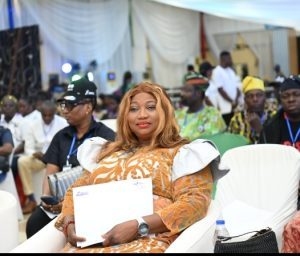
“There is no dignity in defecating in the open,” she said, commending the ministry, partners, and communities for uniting in the effort.
A Milestone for Environmental Sustainability
Special Adviser to the Governor on the Environment, Engr. Olakunle Rotimi–Akodu, described the event as a critical milestone in the state’s quest for public health improvement.
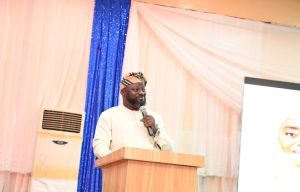
“This campaign symbolizes our collective commitment to ending open defecation and ensuring environmental sustainability,” he said.
Rotimi-Akodu noted the state’s current stock of 1,717 public toilets spread across government and private initiatives and announced plans to add 250 toilets, 100 bathrooms, 120 urinals, and 200 washbasins. He stressed the importance of behavior change and cultural shift, urging residents to abandon open defecation for good.
“As Lagos grows in population, this culture must not continue,” he said. “It’s about changing attitudes and fostering a cleaner, safer city.”
WaterAid Nigeria: Toilets Are Human Rights
Country Director of WaterAid Nigeria, Evelyn Mere, represented by Mr. Kolawole Banwo, underlined the urgency of the campaign, calling it a vital response to the country’s unenviable status as one of the world’s highest in open defecation.
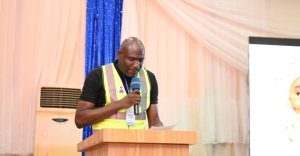
“To be named as such is a slight on our national pride,” she said. “Open defecation is a public health crisis. It degrades human dignity.”
Mere emphasized that addressing the crisis requires collective effort—from households ensuring functional toilets to governments providing decent sanitation facilities in schools, markets, and health centers. She stressed that decent toilets and clean water are not luxuries but human rights.
WaterAid, she noted, continues to support Lagos through inclusive, gender-sensitive facilities in schools and health centers and pledged ongoing support to the campaign. “After this flag-off, the real work begins,” she added. “Let’s make this campaign a legacy of this administration.”
“This Is About Saving Lives” — Save the Children
Country Director of Save the Children Initiative, Famari Barro, applauded the initiative, describing it as a life-saving measure.
“Ending open defecation is about saving lives, protecting dignity, and securing the health of our children,” Barro said through a representative, affirming the organization’s support for the campaign, calling for a united front to ensure a healthier Lagos.
Community Leaders Join the Call to Action
Chief Ogunbanwo, a respected community leader in Ikorodu, declared the campaign a crucial turning point.
“This is not just another event—it is a call to action to protect the health and dignity of our people,” he said. “Open defecation spreads disease, contaminates water, and undermines education, especially for girls.”
He commended WaterAid Nigeria for its ongoing WASH (Water, Sanitation and Hygiene) interventions, including solar-powered boreholes and improved school sanitation in Ikorodu North.
“These projects are lifelines,” he concluded.
Strong Stakeholder Collaboration
President of the Lagos Waste Forum, Ambassador Obuesi Phillips, affirmed that the presence of various stakeholder groups at the event reflected the depth of commitment.
“We cannot call Lagos a mega city while our people still defecate in the open,” she said. “This campaign shows our joint resolve—government, communities, market associations, and transport unions—to end this problem.”
She pledged the forum’s commitment to spreading the message to all five divisions of the state.
UNICEF Pledges Support
UNICEF representative Mr. Monday Johnson highlighted the campaign’s significance, particularly given Lagos State’s population density.
“Statistically, Lagos has about two percent of its population—almost a million people—still practicing open defecation. This is unacceptable,” he said.
He commended the state’s leadership for taking the initiative and projected that Lagos could become the second Nigerian state to be declared open defecation free if this momentum is maintained.
“Toilet is the Cheapest Medicine” — Federal WASH Coordinator
National Coordinator of the Clean Nigeria: Use the Toilet Campaign, Mrs. Chizoba Opara, described the launch as a renewed commitment to health, dignity, and environment.
“We now have 148 Local Government Areas in 20 states that are ODF,” she said. “We believe Lagos can join this list soon.”
She quoted sanitation advocate Jack Sim: “Toilet is the cheapest medicine in the world. It is not an expenditure—it is an investment.”
Opara urged every school, religious center, and political institution to take responsibility and become ambassadors of hygiene.
Lagos Has Been Ahead Since 2019
Dr. Hassan Sanuth, Director of Sanitation Services, Ministry of the Environment and Water Resources, said Lagos had launched the campaign before the federal government’s own Clean Nigeria program in 2019.
“Lagos has always led. Our partnership with WaterAid Nigeria is to reinforce our stance on eradicating open defecation by 2030,” he said.
He noted the state’s unique challenges due to its high population density and influx of people from other regions who may not practice proper hygiene.
“Our goal is not only to provide infrastructure but also to drive behavior change,” Sanuth said. “It’s not enough to build toilets—people must use them. We must make hygiene a way of life.”
He also stressed that open defecation is not limited to rural areas, noting the presence of urban slums with inadequate sanitation facilities. According to a 2021 field report, Lagos had about 3% open defecation prevalence, which the government aims to reduce to zero through enforcement and sustained public education.
Every Lagos Dweller to Become Sanitation Ambassador
With the resounding message delivered by government officials, development partners, civil society, and local communities, the Open Defecation Free/Hygiene Behaviour Change Campaign is more than an event—it is a collective movement for health, dignity, and sustainable living in Lagos.
By integrating infrastructure, policy, community participation, and behavioral change, the campaign aims to ensure that the state not only joins the league of Open Defecation Free states in Nigeria but leads the way as a model for others.
The call is clear: Let every Lagosian become a sanitation ambassador. Let every market, school, home, and public space uphold dignity, and let the journey to an open defecation free Lagos begin—with each individual.
Report by Dayo Emmanuel
dayomanuel2@gmail.com