 National Wire About Nigerians, Nigerian Business and Other Stories


By Precious Nwonu
The Big Sister Mentors initiative for Adolescent Sexual and Reproductive Health under the Access to Comprehensive Care and Essential Support Services (ACCESS) Programme has been rolled out across three Nigerian states, as part of a national effort to improve access to youth-friendly health services for adolescents and young people.
The programme, which is owned by the Federal Government of Nigeria through the Federal Ministry of Health and Social Welfare, the National Primary Health Care Development Agency, (NPHCDA) and the Sector-Wide Approach (SWAp) Office, is being implemented by West & Central Africa Health Options Ltd/GTE (WCAHealth) in collaboration with State Ministries of Health and State Primary Health Care Development Agencies in Enugu, Benue and Taraba states.
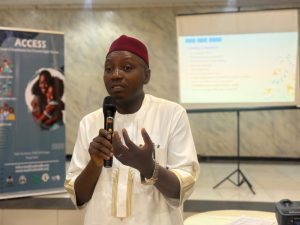
The ACCESS Programme is a national intervention designed to address gaps in access to quality, youth-friendly health services for adolescents and young people, particularly in communities where conversations around sexual and reproductive health remain limited. In many communities, adolescent girls often lack reliable guidance on issues such as menstrual health, consent, relationships and access to health services due to cultural, social and geographic barriers. These structural barriers mean that health facilities alone cannot fully address the gap, which is why the ACCESS Programme adopts a community-embedded mentorship model to extend health education and support beyond health facilities and into communities.
At the centre of this intervention is the Big Sister Initiative, a structured mentorship model developed to equip adolescent girls with accurate information, life skills and support systems that enable them to make informed decisions about their health and wellbeing.

The initiative operates a two-tier system consisting of Big Sisters and Little Sisters. Big Sisters are community women who are trained as peer mentors and equipped with accurate sexual and reproductive health knowledge, facilitation skills and referral pathways to primary health care facilities. After their training, they are deployed immediately to their wards where they mentor adolescent girls known as Little Sisters.
The Little Sisters are adolescent girls organised into groups or cohorts under each Big Sister, where they participate in safe and guided discussions on sexual and reproductive health topics, receive support through referrals to youth-friendly primary health care services and benefit from peer-to-peer learning and mentorship.
Through this approach, the ACCESS Programme aims to improve knowledge among adolescent girls, promote positive health-seeking behaviour, increase the use of youth-friendly health services and contribute to changing harmful social norms at the community level. Programme officials say the initiative is also expected to contribute to the reduction of maternal and newborn mortality by strengthening referral pathways and improving access to adolescent-friendly services at the primary health care level.
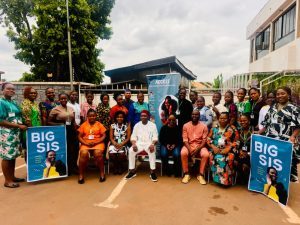
As part of the March 2026 training rollout, the ACCESS Project conducted its first simultaneous three-state Big Sister training across Enugu, Benue and Taraba states from March 24 to March 30, 2026. A total of 60 Big Sisters, with 20 participants from each state, were trained in facilitation, sexual and reproductive health knowledge, referral pathways, community engagement and reporting.
The training sessions in each state were co-delivered with full representation from State Ministries of Health and State Primary Health Care Development Agency officials, reflecting government involvement and ownership of the programme.
In Enugu State, the Big Sister training took place at De-Martins Mirage Hotel in Nsukka and was attended by the Honourable Commissioner for Health, Prof. George Ugwu; the Assistant Sexual and Reproductive Health/Family Planning Focal Person at the Enugu State Primary Health Care Development Agency, Maureen Nwankwo; and other key stakeholders in the health sector.
In his opening remarks, the Honourable Commissioner for Health thanked the development partner, WCAHealth, for introducing the Big Sister mentorship model aimed at addressing maternal mortality and improving adolescent health outcomes.
He urged the selected Big Sisters to use the opportunity to effectively engage Little Sisters in their respective communities and wards using the structured sessions, referral systems and community engagement approaches provided through the training.
Prof. Ugwu also stated that the Ministry of Health in the state is pleased with and fully supports the ACCESS Project and used the opportunity to highlight key achievements of the Executive Governor of Enugu State, Peter Mbah, including the ongoing construction of Type 2 Primary Health Centres across all wards in the state, among other health sector initiatives.
Officials emphasised that the ACCESS Programme is government-led and delivered through federal and state health institutions, with WCAHealth serving as the technical implementation partner. They also noted that the Big Sister model is community-centred, as the mentors are trusted community women such as neighbours, mothers and peers who help extend the reach of health services beyond clinic walls into homes and communities.
According to programme coordinators, adolescent health remains a national priority, and the ACCESS Programme directly addresses the gap in adolescent sexual and reproductive health by enabling informed decision-making, encouraging positive health-seeking behaviour and reducing stigma around adolescent health issues.
The simultaneous rollout of the Big Sister training across Enugu, Benue and Taraba states within one week, officials say, demonstrates the scale of the programme and the level of government commitment at both federal and sub-national levels.
By strengthening demand for health services, improving referral pathways and supporting adolescent-friendly services at primary health care facilities, the ACCESS Programme is expected to contribute to Nigeria’s broader targets of reducing maternal and newborn mortality.