 National Wire About Nigerians, Nigerian Business and Other Stories


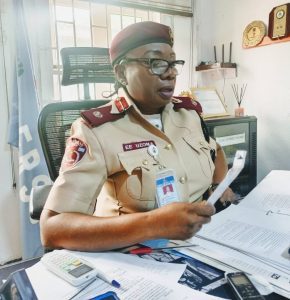
Federal Road Safety Corps (FRSC), has made giant strides in carrying out its functions as specified in the 2007 Acts establishing it. In this interview with the Unit Commander, Lagos Island, Assistant Corps Commander, Esther Uzoma, with Okosun Dennis, she x-rayed her commands performances, saying “Early Morning Cry” strategy has become the game changer at enforcing order and curbing crashes on the roads Excerpts.
 You have brought remarkable changes to Lagos Island Unit. Let’s meet the woman behind this innovations?
I am Assistant Corps Commander Esther Uzoma, the Unit Commander, Federal Road Safety Corps, Lagos Island.
What are your primary roles as the Unit Commander, Lagos Island?
I am in charge of the command; ensuring that our operations go according to the directives from the Headquarters. As you might have known, FRSC is the lead agency in road safety administration and management. My responsibility is to make sure that the road safety activities in Lagos Island are carried out accordingly. We clear obstructions from the roads, create a safe motoring environment for everybody in the country; carry out rescue operations wherever there is a crash and other attendant issues.
 Some Nigerians actually believe that the work of FRSC is only to monitor and regulate vehicular movements and respond to accident where it does happen. In specific terms, what are those specific roles performed by FRSC?
Our general roles is to create a safe motoring environment in the country. This, we do by ensuring we clear obstructions from the roads; carry out rescue operations and enforce the Road Safety regulations on the motorists. We also have the duty of producing driver’s license, number plates and educating motoring public on safe driving ethics.
The functions of FRSC is interwoven and intertwines with other agencies like the Vehicle Inspection Officer (VIO). In which areas do you have similarities, differences that could lead to a clash?
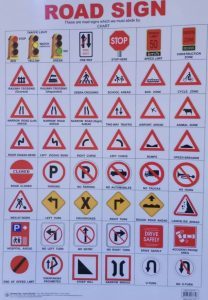 I may not want to dwell on the functions of VIO and others, but I know that our roles are complementary and they run concurrently. However, FRSC is a Federal government agency by the establishment Act 2007 when we came into being. We have our roles cut out for us. We meet on the road during operations and that don’t stop us from carrying out our specific duties.
A lot is being done by FRSC to ensure that the consumption of alcohol and drugs by commercial drivers are stopped or reduced to the barest minimum. Statistically, being in charge of this area, and considering that Lagos is very volatile for things like that. Can you let us know the arrest you have made, crashes that have happened within your command due to such consumptions?
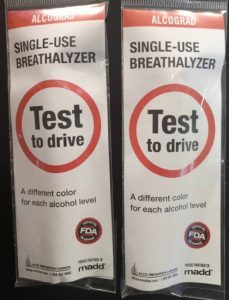
Drunk driving is a major cause of crashes on our highways. We take that seriously to ensure that crashes are reduced. I can tell you that in those areas, we make a lot of arrest on daily bases. But due to several enlightenment campaigns during the “Ember” months and leveraging on the instrumentality of our “Daily Morning Cry” whereby we go to motor parks, Churches and Mosques of our choice to educate and enlighten drivers, as such alcohol induced crashes are declining. However, a lot of drivers are arrested due to faults from tyre, number plates, driver’s licences, dangerous driving etc. Sadly, drinking and driving don’t go together. It is not even good and safe for a drunk pedestrian to be crossing the road not to talk of a drunk driver behind a mechanical object, like a vehicle. We use Breathalyzer to test drivers. My men go out with it to test drivers suspected to be under the influence of alcohol. Anyone caught with strands of alcohol will have his vehicle impounded.
What happens to such driver?
The driver will be booked and not allowed to drive. In addition, he would pay the necessary fine(s).
What are those specific fine(s)?
 There are various types of fine depending on the offence committed. Such fines are usually paid into the Federal Government Single Treasury Account.
Between September 2022 when you carried out enlightenment campaign at Obalende and now, in terms of feedback mechanism, would you say the campaign is yielding positive result in terms of crashes that you have had?
In the last one month, we have not recorded any crash within Lagos Island. Those recorded in the past were not attributed to drunk driving. For every crash that occurs, when our men go for rescue operation, they will find out the cause of the crash and that is reflected in our reports. Most times, what we see is dangerous driving and that is why we are also enforcing speed limit using the device installed in the vehicles.
We have also found out that over speeding causes a lot of crashes. With the law that came into existence in 2016, most vehicle owners have started installing speed limit devices, especially commercial vehicles. Those vehicles arrested without speed limit device in them, are impounded and made to buy it and install through accredited installers.
However in recent past, we have not recorded any accident emanating from the use of alcohol rather it’s speed related crashes. In the first quarter of the year, there was no single record of crash due to alcohol use within the Commands coverage.
 It’s worrisome that so many commercial buses don’t have seat belt rather they use a rope as sling for the front passengers. Do you carry out random checks cum operations on seatbelt or do you intend to do so in the future to check such malfeasance?
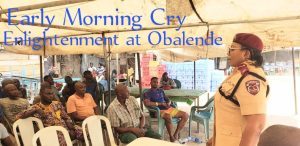
This is part of what we carry out in our “Early Morning Cry” enlightenment campaigns. Our men enter any chosen motor park and they do that daily. We have two patrol teams that go out early in the morning to talk to them. During such domesticated enlightenment, they educate them on several causes of road crashes and safety rules – including use of seatbelt – while driving. Others include not to drink alcohol, not to use worn out tyres and not to overload.
Practically, to what extent do you drive this home because you can easily tell a driver to use his seatbelt and they are not enforcing it. Do your men check the vehicles to ensure the seatbelts are good and they’re not using rope?
When they stop vehicles, they check. Our policy and procedure is to stop a vehicle that is suspected to have committed primary offence, they flag the driver down, check whether he has licence or if the vehicle is mechanically deficient including the lighting systems. We have well trained men to point these out which presents an opportunity to carry out full check on the vehicle and the driver.
Overloading is frightful. I have sundry pictures of vehicles pictured on the roads overloaded; some with loads on the roof of vehicle. The irony is that FRSC operatives are on these roads. Are such drivers granted permission or they just overlook them?
Nobody grants any driver permission to overload. However, different vehicle have loading capacity. Our men look out for such vehicles and that is what forms part of primary offence. Any vehicle seen to be overloaded is stopped and other offences emanate from that. We frown at it and that was part of our last December campaign – overloading, tyre and night journey.
In performing your duties, you don’t expect everybody to like you. There is so much apprehension and hatred expressed towards your men. What kind of safety precautions do your men observe from vehicular attacks?
As you know, we don’t bear gun. However, we have had incidences of attacks. First, we teach our men not to be aggressive, but rather to be cautious and polite to the driving public. It is never a do or die affair. When they flag someone down and the person refuses to stop, they take his number plate and put such driver on a “reprobate offender” list and pass the number to other agencies and Commands. Such drivers are subsequently arrested. We sing it to them that their lives come first. Also, we don’t encourage our men to pursue offenders to avoid escalation of problems they are trying to solve.
We’re largely dependent on the road for commuting. How are you coping with these motorists?
We are doing our best in consonance with our manpower. As a Unit Command, we go out everyday carrying out our functions to the best of our abilities and to create a safer motoring environment for the driving public. In the past weeks, we have specifically concentrated on checking drivers without valid driver’s license and trucks that are meant to carry goods only but carry passengers as well, based on directives from our Sector Command. We have coped with the manpower and resources at our disposal.
Apart from “Ember months” sensitization and “Early Morning Cry,” how often do you hold seminars, workshops or symposia with these drivers?
We have what is called Road Transport Safety Standardization Scheme (RTSSS) which has much to do with fleet operators – any organisation that has more than three vehicles in its fleet, is identified and encouraged to register because every fleet operator is expected to register with FRSC. As a result, they key into workshops organized by the Corps where their safety managers attend and by extension pass the lecture to their drivers. During such seminars, they are taught various things that could prevent crashes.
Does that also take into consideration the horrible state of some of these vehicles; looking antiquated and disheveled ones?
Yes. We focus on mechanically deficient vehicles and those with excessive smoke emission. These are offences because they can cause traffic crash.
What is your working relationship with drivers that come here for lectures and other agencies?
We have good relationship with other agencies. However, when we arrest a driver we have had negative encounter with, we give them enlightenment. We have our Public Enlightenment (PE) hall. We educate and show them videos of crashes for them to take a cue from and imbibe good culture of driving. For other agencies, we complement one another and we reach out to others. We have FRSC partnership for effective intervention. These cut across every sector both public and private. We have robust relationships with the military, paramilitary organisations and other corporate institutions. When I assumed office, I visited all the military and paramilitary agencies within my jurisdiction – the VIO, LASTMA, DPOs in Lagos Island. This is for us to synergize.
Your advise to motorists?
Life has no duplicate, they should treasure it. They should obey traffic laws. For the fact that we are out on the road is not for our own benefit but for the motoring public and even the pedestrians. Not only motorists that have authority to use the roads, animals also have authority to use the road. Whatever we are doing is for the safety of everybody so that nobody loses his or her life. Therefore, people should see us as people who care for them. Most times, most of the rescue are done at the middle of the night. Our toll free line is 122 and it is on 24/7. We receive calls anytime of the day and night from FRSC call center Abuja, drawing our attention to crashes based on nearness to the scene of the crash. It’s a humanitarian job and people shouldn’t see us as enemies. Most times, we carry victims to the hospitals, we would be turned back because of lack of bed space. We have to get available hospital that can admit such victims – most times, as far as Ikeja General Hospital – to save a soul. These are not paid for but part of our mandate to save souls. When we tell you to use good tyres, don’t overload your vehicles and use your seatbelt, it’s not for our benefit because we don’t sell these items but to ensure that people are protected. They should see us as their friends.