 National Wire About Nigerians, Nigerian Business and Other Stories


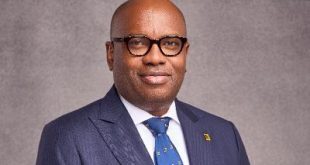
After years of silence, Nigeria’s indigenous telecoms brand, ntel, is preparing a major return to the market. The company’s Chief Executive Officer, Soji Maurice-Diya, has confirmed that ntel will officially relaunch in the first quarter of 2026, under a refreshed strategy that positions it as a “digital-first, infrastructure-light MVNO focused on innovation, inclusion, and sustainability.”
Maurice-Diya made the announcement during the Technology Times Thought Leadership Series, a platform that brings together decision-makers shaping Nigeria’s digital transformation.
He described ntel’s relaunch as “the beginning of a new chapter — not just for ntel, but for Nigeria’s telecoms industry as a whole.”
According to him, the comeback will be leaner, smarter, and innovation-driven, using digital platforms, partnerships, and agile policy opportunities to serve Nigeria’s underserved and value-conscious markets.
“We’re not returning to chase subscriber numbers,” Maurice-Diya said. “We’re coming back to serve a generation of Nigerians who value innovation, efficiency, and authenticity in their digital experience. Our comeback will be defined by focus, speed, and value creation.”
Reflecting on the state of the industry, Maurice-Diya noted that Nigeria’s telecoms sector has matured and now stands “at the cusp of a new transformation phase.”
He acknowledged that two decades of liberalisation had built a robust and competitive ecosystem, but warned that sustaining progress would require a shift from expansion to innovation.
“The next wave will not come from connectivity alone — it will come from what we build on top of connectivity,” he said. “It’s time to innovate, not just interconnect.”
With over 200 million active lines and growing broadband penetration, he believes opportunities lie in value-added digital services, intelligent networks, and inclusive access models that cut across sectors — from agriculture and education to fintech and entertainment.
The ntel CEO commended the Nigerian Communications Commission (NCC) for maintaining investor confidence through consistent regulation but urged regulators to adopt a more innovation-friendly mindset.
“Policy should not be about control — it should be about enabling possibilities,” he said. “We must let innovation happen first, then regulate with hindsight and understanding. That’s how nations leapfrog into leadership in digital economies.”
He further argued that telecoms policy must now intersect with financial inclusion, renewable energy, and data governance, recognising the cross-sectoral nature of today’s digital economy.
To foster growth, he called for predictable spectrum management, infrastructure-sharing frameworks, and incentives that allow smaller operators and virtual networks to thrive.
Maurice-Diya highlighted the uneven spread of broadband penetration, noting that urban centres remain better connected than rural areas.
He sees this gap as an opportunity for innovation-driven operators.
“We must power digital inclusion with sustainability, not subsidy,” he asserted. “The rural opportunity is immense — but to unlock it, we need smarter, localised broadband models.”
He advocated public-private partnerships, renewable-powered rural towers, and incentives that make it commercially viable to expand connectivity beyond major cities.
He also applauded the National Broadband Alliance and the backbone fibre expansion initiatives, calling them critical to building an inclusive digital economy.
On local content, Maurice-Diya emphasised that true indigenous participation should focus on capacity and competence, not just ownership.
“Local content is not just about being Nigerian — it’s about being capable,” he said. “We must build the human capital that can design and monetise the digital infrastructure of the future.”
He praised the government’s 3MTT (Three Million Technical Talent) initiative as a transformative step and urged the private sector to play a bigger role in training, internships, and innovation labs.
“The most valuable spectrum of the future is not measured in megahertz — it’s measured in mind power,” he quipped.
ntel’s comeback will be anchored on a Mobile Virtual Network Operator (MVNO) model — an infrastructure-light, innovation-heavy approach designed for speed and flexibility.
“We’re coming back with a smaller, smarter play,” Maurice-Diya explained. “Our strategy focuses on partnerships over ownership, platforms over towers, and experiences over expansion.”
Rather than building costly new infrastructure, ntel will leverage existing wholesale network agreements and spectrum-sharing arrangements to deliver affordable, high-quality data and digital services.
The company’s focus will be on youth-driven digital inclusion, affordable connectivity, and next-generation services that empower Nigeria’s creative and tech-savvy population.
“Our youth are the most connected and ambitious generation in our history,” he said. “ntel will be their platform — to learn, build, and thrive in the new digital economy.”
Maurice-Diya linked ntel’s re-entry to Nigeria’s broader digital economy vision, which positions technology as a driver of national competitiveness.
“Telecoms is the spine of the digital economy. Without robust connectivity, digital transformation cannot scale,” he said.
He called for greater coordination among the Ministry of Communications, Innovation and Digital Economy, NCC, NITDA, and the Central Bank of Nigeria to harmonise digital policies and reduce investor friction.
On attracting investment, Maurice-Diya urged the government to provide policy stability and predictable incentives for long-term capital in telecoms and broadband infrastructure.
“Investors go where predictability lives,” he said. “Nigeria has the market and the talent — it now needs policy consistency.”
He also stressed that regulators must balance control with creativity, allowing innovators to test ideas freely while ensuring consumer protection.
“We cannot regulate innovation before it happens. The MVNO framework is proof that agility is the new infrastructure,” he added.
Maurice-Diya concluded with a vision of ntel as a symbol of renewal in Nigeria’s telecoms journey.
“We want ntel to be remembered as the brand that came back to redefine what it means to be connected in Africa’s largest digital market,” he said. “Our success won’t be measured by subscriber numbers, but by the impact we create in inclusion and innovation.”
Industry observers say ntel’s return will inject fresh competition and creativity into Nigeria’s telecoms landscape, marking a new era where innovation and sustainability, not just scale, define success.