 National Wire About Nigerians, Nigerian Business and Other Stories


The Director-General of the National Information Technology Development Agency (NITDA), Kashifu Inuwa, has emphasized the need for robust collaboration among academia, industry, and government to harness innovation for sustainable national growth and youth empowerment.
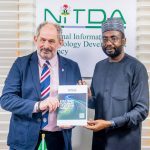
Inuwa made this call during a working visit by a delegation from Lancaster University, UK, led by Professor Kirk Semple, Director of International Research, to NITDA’s headquarters in Abuja. The visit aimed to explore avenues for strategic collaboration under the Research and Innovation Partnership for Entrepreneurship (RIPE) programme.
 According to Inuwa, Nigeria and Africa face a significant research investment gap that hinders progress toward building knowledge-based economies. He noted that many Nigerian farmers lack access to critical data and digital tools that could revolutionize productivity and resource efficiency.
Inuwa highlighted NITDA’s focus on emerging technologies such as Artificial Intelligence (AI), Internet of Things (IoT), and blockchain, noting that these technologies hold vast potential for solving local problems and creating new economic opportunities.
The NITDA boss also emphasized the need to align university curricula with real-world industry demands and called for better coordination among stakeholders to avoid duplicative efforts.
The meeting marked a significant step forward in NITDA’s commitment to international collaboration, aligning with the broader objectives of President Tinubu’s Renewed Hope Agenda.
“The goal is to create a vibrant technology-research ecosystem that unites academia, industry, government, entrepreneurs, and risk capital,” he stated.
He further emphasised the need to align university curricula with real world industry demands, encouraging institutions to develop talent capable of addressing practical challenges through innovation. Inuwa also called for better coordination among stakeholders, warning against the inefficiencies of duplicative efforts.
Inuwa also referenced the eight strategic pillars identified by the Federal Government as drivers of national development. These include Reforming the economy for inclusive and sustainable growth, strengthening national security for peace and prosperity, boosting agriculture to achieve food security, unlocking energy and natural resources, enhancing infrastructure and transportation, focusing on education, health, and social investment, accelerating diversification through industrialisation and innovation, Improving governance and service delivery.
To support these priorities, Inuwa further highlighted NITDA’s Strategic Roadmap and Action Plan 2.0 (SRAP 2024–2027), which is structured around eight complementary pillars. These include Foster Digital Literacy and Cultivate Talents, build a Robust Technology Research Ecosystem, Strengthen Policy Implementation and Legal Framework, Promote Inclusive Access to Digital Infrastructure and Services, Strengthen Cybersecurity and Enhance Digital Trust, Nurture an Innovative and Entrepreneurial Ecosystem, Forge Strategic Partnerships and Collaboration, and Cultivate a Vibrant Organisational Culture and an Agile Workforce in NITDA.
“We place a strong emphasis on research because without it, you can not develop effective policies or regulations that drive real change in the ecosystem,” Inuwa added.
The meeting marked a significant step forward in NITDA’s commitment to international collaboration, aligning with the broader objectives of President Tinubu’s Renewed Hope Agenda, and positioning Nigeria to take a leadership role in the global digital economy through research-led innovation, DG stated.
In his earlier remarks, Professor Semple highlighted Lancaster University’s global research reputation and its commitment to strategic collaborations that deliver societal value, noting that universities serve as critical hubs for organizations to access expertise and resources necessary for solving global issues..
“Universities today are under pressure to demonstrate value beyond knowledge creation. Strategic partnerships like this with NITDA helps ensure research informed policy, supports innovation, and drives meaningful change in communities,” Semple said.
He also underscored the role of innovation in bridging the gap between academia and society, noting that universities serve as critical hubs for organisations especially those lacking R&D capabilities to access expertise and resources necessary for solving global issues like climate change, public health, and technological inequality.
Professor Semple concluded by affirming the importance of creating diverse, long-term networks that foster cooperation across sectors, emphasizing that the true measure of success lies in sustained impact rather than accolades.