 National Wire About Nigerians, Nigerian Business and Other Stories


Nigerian Journalists have been asked to uphold professional ethics as they prepare to cover the 2019 general elections.
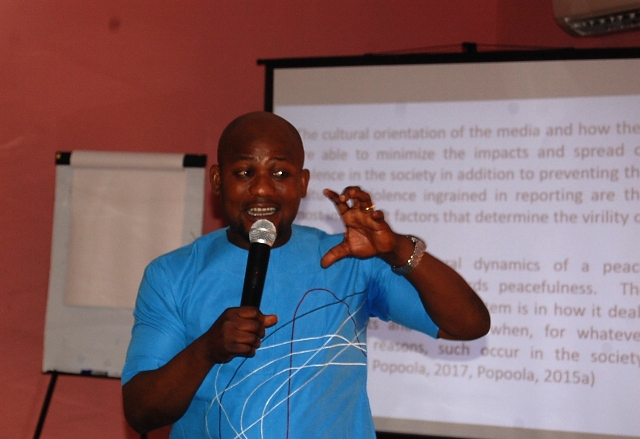
The call was made by Professor of Journalism, Communication and Media Studies, Ajayi Crowther University, Oyo, Oyo State, Professor Muyiwa Popoola at a recent training for Journalists drawn from the South West geopolitical zone.
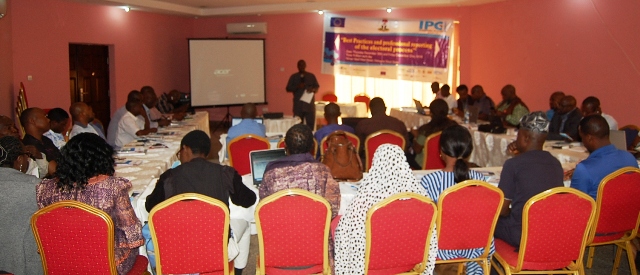
Organised by the International Press Centre (IPC) and the European Union Support for Democratic Governance in Nigeria (EU-SDGN), the two-day media training with the theme: Best Practices and Professional Reporting of the Electoral Process, attracted about 40 journalists to Oshogbo, Osun State capital.
According to Popoola, “This kind of workshop bridges the gap between the classroom and the industry and it is highly commended.”
Continuing, he said, “News is much easier to describe than to define,” advising journalists not just to search for scoops but to work hard on investigation in order to represent all sides.
“As Journalists, we should not just be searching for scoops, we should research, we should not be lazy and should look for shadow parties on order to solve political conflicts,” Popoola said.
He added that, “Journalists should endeavor to ask the opposing side such questions that, may reveal common ground. This could focus on interests shared by opposing parties, maintain balance and temperate in the use of words.”
Earlier, Director of the IPC, Mr. Lanre Arogundade in his welcome address revealed that over 200 applications were received out of which only 40 journalists were invited to participate in the training to represent journalists from the South West geopolitical zone.
Arogundade who spoke through IPC’s Programme Manager, Sanmi Falobi at the event also said, “The event is organised to critically examine the interconnections between the public, the media and elections towards developing an agenda that seeks to strengthen the role of the media in facilitating a credible electoral process.”
In his own comment, Chairman of the Osun State chapter of the Nigerian Union of Journalists, Mr. Kehinde Ayantunji commended IPC for the workshop, urging well-meaning relevant organisations to emulate the gesture.
“I commend IPC for this brilliant workshop. As a union we are assuring you of our cooperation on initiatives that can enhance our career as Journalists,” Ayantunji said.
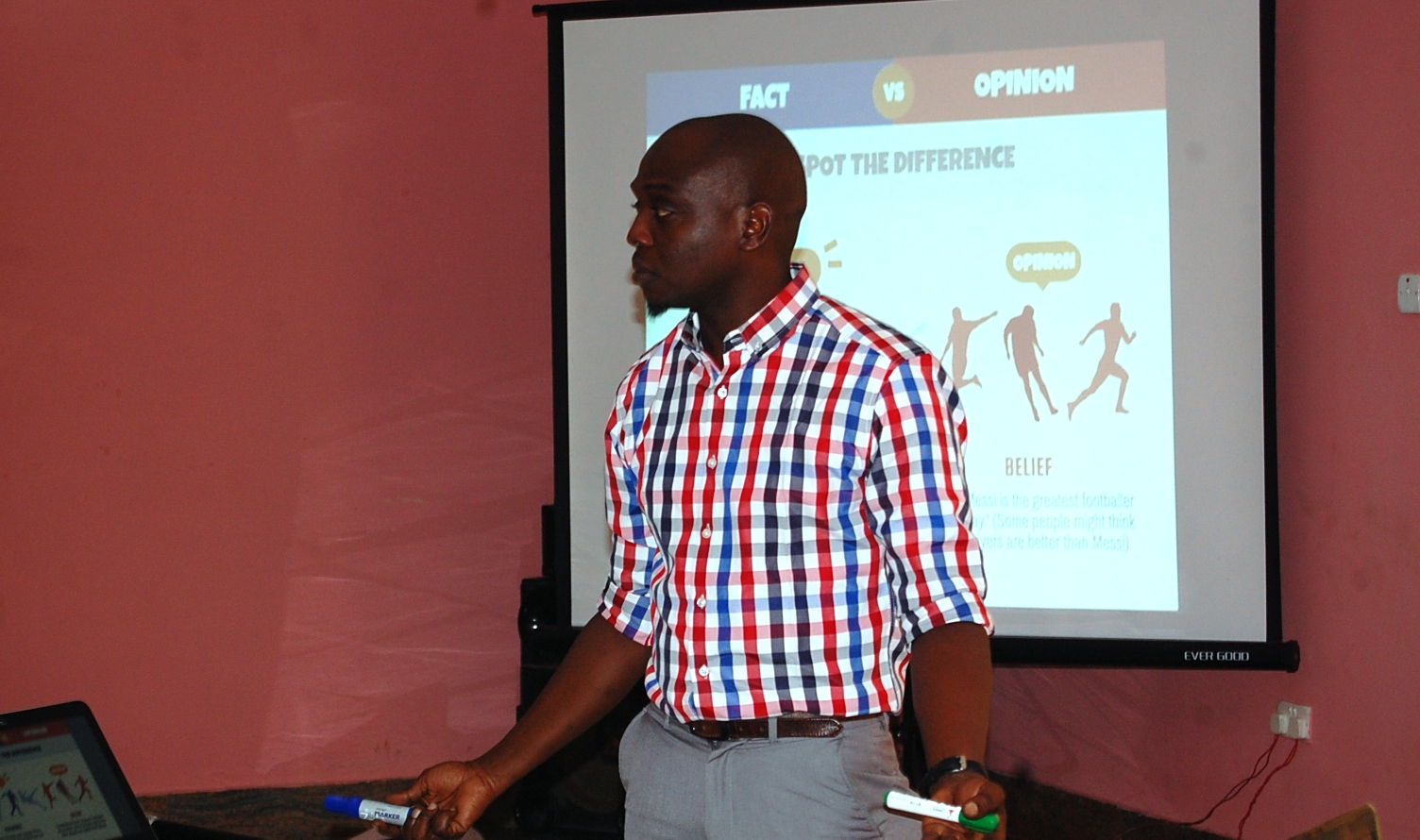
Delivering his paper, Nigeria Editor at AfricaCheck, David Ajikobi, took participants on eliminating bias in election reportage.
Emphasising the need for responsible journalism, Ajikobi remembered the compilations that accompanied the Ebola crisis of 2014 in Nigeria.
“More than 100 people died from complications as a result of drinking and bathing with salt water according to the Chief Medical Director of the Lagos University Teaching Hospital,” he remembered, urging journalists to cross check what they hold as facts before reporting.
He however enjoined journalists to get new skills necessary in fact-checking and use such to present correct facts since readers tend to believe what they read from journalists.
Warning journalists not to fall for fake news, Ajikobi advised that journalists must go for the facts instead of mere speculations.
“A fact is what can be checked and backed up with evidence.
“Asking questions is the first step of accountability if we must do the right thing,” he said.
Warning further on fake news being projected via the social media Ajikobi took journalists through some tools they could use to verify pictures often used to propel fake news.
“As journalists, you must be careful not to fall for fake accounts when you are using the social media as news source because your credibility built over the years can vanish when you share false information,” he warned.
Also at the training was founder of The Journalism Clinic, Taiwo Obe who took journalists through sessions.
In one of his sessions, Obe, who had invested over 40 years in journalism, counseled journalists to think like entrepreneurs.
“I want you to leave this workshop thinking like entrepreneurs,” he counseled, challenging participants to change their mind set from the traditional journalism.
Using his own media experience, Obe went on to encourage journalists to think differently in order to maximize their career opportunities and ensure they fact-check before publishing.
“If you have not trained your mind on what you do daily, I want you to re-condition it and if you are not critical about your thoughts, you would be doing the same routine. It is necessary to do a self-worth analysis,” he said.
Obe also took participants through career enhancing tools necessary for a 21st century journalists. According to him, journalists must be equipped in order to effectively cover the electoral process.
Some of the tools he took the participants through included: Quick, Anchor, Google earth, Nimbles, Facebooklife among others.
Some of the participants took turn to relay their experiences after the two days training.
Temitope Ojo from Vanguard Allure said, “I learnt that the use of certain words could be ‘injurious’ and inciting to, not only the political class, but also the general public.
“As a reporter, the need to be balanced to both sides cannot be over-emphasised. One must endeavor to give equal opportunities to all sides.”
From Real News Magazine, Anayo Ezugwu after the event said, “My take home is that journalists must be professional in reporting elections.
“We must also adhere to the ethics of the profession and learn to fact-check reports presented by government officials.”