 National Wire About Nigerians, Nigerian Business and Other Stories


…Says parents must take responsibility to protect their children from abuse
Chief Executive of AFRUCA, a UK-based charity advocating for child protection and anti-trafficking, Debbie Ariyo OBE, has expressed deep concern over Nigeria’s poor record of rape convictions, lamenting that the country has secured only 64 convictions despite the high rate of child sexual abuse according to an online source.
Ariyo made the remark while speaking at a one-day workshop organized by CEE-HOPE Nigeria in Lagos, which brought together child rights workers, teachers, and community stakeholders to discuss issues affecting children and the urgent need for stronger protection mechanisms.
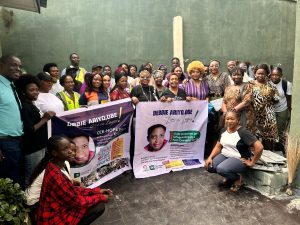
Ariyo, who founded AFRUCA (Africans Unite Against Child Abuse) in 2001, has positioned the organisation to address child safeguarding and trafficking issues within African diaspora communities and to provide services that support children, families, and survivors of abuse.
Ariyo holds an Executive Master’s degree in Public Administration from the London School of Economics and Political Science (LSE), a Master’s degree in Urban Policy from the University of North London, and a Bachelor’s degree in French and Education from the University of Benin, Nigeria. She is a recipient of the Order of the British Empire (OBE) for her services to child protection.
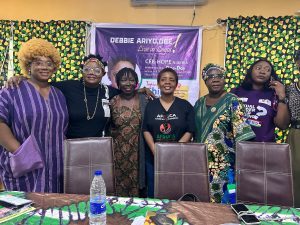
“The issue of child protection is a very sensitive thing,” Ariyo told the gathering.
She emphasised that child protection is a collective responsibility that transcends professions, religion, or parental status.
“It is a very important issue. Those of us working with children know that child protection is everybody’s business—whether you are working with children or not, whether you are a pastor in a church or an Imam in a mosque, it doesn’t matter what you do, whether you have children or not—child protection is your business,” she said.
Recalling the tragic story of Ochanya, the Benue schoolgirl who died after years of sexual abuse by a lecturer and his son, Ariyo described the case as heartbreaking and symbolic of Nigeria’s deep-seated failure to protect children.
“The story of Ochanya is very pathetic. I was not happy when I heard the man who abused her, a lecturer whose family she lives with is still walking freely, as well as his son who also abused the girl, who is now dead,” she said.
Ariyo reacted to a report highlighting that Nigeria has recorded only 64 rape convictions, calling it “extremely shocking” and evidence that most perpetrators escape justice.
“Some people shared some things online which are very alarming—that in this country, there are only 64 convictions of rape, which is extremely shocking. This is not even a drop in the ocean,” she said. “What should always be at the back of your mind is the safety of your children. That is prevention.”
Ariyo warned that many cases of child abuse happen within homes where parents employ domestic workers without adequate supervision. Drawing from her experience in the UK, she noted that having multiple domestic workers in Nigerian homes exposes children to unnecessary risks.
“In the UK, we don’t have too many domestic workers in homes. We do our chores ourselves. But when I visit my friends here, some of them have two or three domestic workers, and I ask, what are you doing with them?” she queried.
“Even female domestic workers abuse female children. Males abuse male children. Anytime you have strangers in your house, know one thing for sure—that your children are at risk. At risk means something can happen to them. It doesn’t mean it will happen, but it can happen. Your duty as a parent is to make sure things don’t happen to your children.”
She urged parents to limit their children’s exposure to risky environments and to practice preventive child safeguarding.
“There is a Child Protection Act, but as a parent, don’t allow your children to sleep in other people’s houses, because you’ll be putting them at risk. You must be aware of things that can put your children at risk and ensure such things don’t happen.”
“Even if you are poor, it should not make you negligent. If you intervene early, you can protect your children. Early prevention, early intervention, and protection itself are all components of child safeguarding,” she emphasised.
Ariyo also called for greater investment in child education and awareness, stressing that children must be equipped with the knowledge to recognise and resist abuse.
“We should empower the children. Every child should know what child abuse is. Children should be able to identify things that are empowering and be able to protect themselves,” she said.
“Every single child should know how they can be vulnerable online,” she added, highlighting the growing threat of online abuse and exploitation.
In his remarks, Mr. Makinde, Head Teacher of Oke Ira Primary School, Lagos, lamented that many child abuse issues stem from poor parenting and neglect at home.
“The problems we are facing in school are from the homes,” he said. “At the school some time ago, I saw a child with a cut on his head. He said his father gave him the cut. We summoned the man, and when he arrived, he said the boy was telling lies—that he was a stubborn boy who sustained the injury himself.”
Makinde narrated that despite interventions, some parents remain uncooperative and dismissive of teachers’ concerns.
“Then we asked him to take the boy to the health centre nearby. If we school managers don’t take note of little things, there won’t be solutions. We are still far behind in awareness,” he lamented.
He also criticized the low level of education among children in some communities.
“There are certain children that have never been to school. A 13-year-old girl should be in secondary school, not staying at home. Unless we change our orientation, we’ll keep facing these problems. Families are struggling, and we see a lot of these cases in primary schools,” he said.
Founder of CEE-HOPE Nigeria, Betty Abah, shared her personal story to illustrate the impact of education and awareness on the life of a girl child.
“I started school at the age of nine because, growing up, my dad didn’t believe in girl-child education. Most of my elder sisters were not in school. I was just lucky that by the time I came of age, my dad had relaxed the rule,” she narrated.
“I probably would have been somewhere, married and having ten children, but I was educated. That is why I’m here today. I don’t blame my dad, because he was a product of that time when girl-child education in our area was not emphasised,” she said.
Abah noted that early marriage and cultural discrimination continue to hinder the progress of many girls in rural communities.
“In the area I grew up, girls get married as soon as possible to start having children, instead of waiting for somebody to ‘spoil’ them,” she said. “We need to start paying attention to children. Even parents discriminate against their own children. We should share this information and talk about empowering children against abuses.”
She stressed that ending child abuse requires a collective change of attitude, especially among parents.
“When we add poverty to ignorance, the problem multiplies. We must start talking about children and how to empower them against all forms of abuse,” Abah concluded.
Participate took turns to share their experiences about the subject of discussion, appreciating CEE-HOPE and Debbie Ariyo for their standing for the rights of the child.
The event ended with a renewed call for collective responsibility in child protection. Participants agreed that government, schools, religious institutions, and families must work together to protect children from abuse, ensure justice for victims, and create a safe environment for every Nigerian child.
Report by Dayo Emmanuel.