 National Wire About Nigerians, Nigerian Business and Other Stories


Report by Precious Nwonu
The first thing many people notice is not the pain. It is the way others stare.
In a crowded clinic waiting room in Benin City, a young woman sits quietly with a scarf wrapped around her arm. Beneath the fabric is a swelling that has grown slowly over the years, twisting the shape of her forearm into something she no longer recognizes as part of herself. She has learned to keep it covered, not because it hurts all the time, but because of the way people recoil. Some whisper.
Some move seats. A few ask if it is contagious. She has heard the question so many times that she now answers before it is asked: “No, it is not an infection. It is not a curse. It is not something you can catch.” What she is living with is a condition many Nigerians have never heard of, yet quietly exists across communities neuroma-fibrosis.
Dr. Loretta Oduware Ogboro-Okor, an Obstetrician and Gynaecology Surgeon who has encountered patients with these lesions through multidisciplinary referrals, explains that neuroma-fibrosis is an umbrella description for conditions involving abnormal growth of nerve tissue combined with fibrous tissue proliferation. In simpler terms, it is when nerves and scar-like tissue grow in a way they should not, leading to swellings, nerve compression, chronic pain, and often visible deformities of soft tissue. It can manifest as neurofibromatosis, a genetic disorder that causes tumors to grow along nerves, or as traumatic neuroma, which develops after surgery, injury, or amputation when regenerating nerve fibers become trapped in scar tissue. Though medically benign in many cases, the social, psychological, and functional consequences are anything but mild.
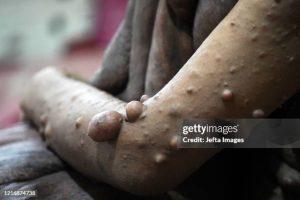
Credit: Getty Image
The most common form is Neurofibromatosis Type 1 (NF1), also known as von Recklinghausen disease. International data from institutions such as the National Institutes of Health and the World Health Organization show that NF1 affects about 1 in every 3,000 people worldwide, making it one of the most common genetic neurological disorders. In Nigeria, precise prevalence data is scarce due to underdiagnosis and poor reporting systems, but teaching hospitals such as the University College Hospital Ibadan, Lagos University Teaching Hospital, and University of Benin Teaching Hospital have documented multiple cases over the years, often discovered only when tumors have grown large and disfiguring. NF1 typically presents with multiple cutaneous or subcutaneous nodules called neurofibromas and characteristic skin spots known as café-au-lait spots.
However, these spots pose a unique diagnostic challenge in Nigeria and across Africa. On darker skin, the light brown patches described in textbooks are not easily visible. Some researchers have described them in African patients as “café-sans-lait” or blackish-brown spots that blend into the skin tone. Because they are not obvious, early diagnosis in infants and children is frequently missed. By the time tumors begin to grow along nerves, the opportunity for early monitoring has already passed.
Another severe form is the plexiform neurofibroma. These are congenital or early developmental lesions that grow along multiple nerve branches, often described by doctors as feeling like a “bag of worms.” They can burrow deep into tissues, involving limbs, the face, or the trunk, causing massive disfigurement. International studies show that between 5–10% of these plexiform tumors can transform into malignant peripheral nerve sheath tumors (MPNSTs), an aggressive cancer. In Nigeria, many patients present only when the tumor has already reached a size that interferes with movement, vision, or breathing, and in some cases, has undergone malignant change.
Traumatic neuroma tells a different story.
It is not genetic. It is the body’s attempt to heal. After surgery, injury, or limb amputation, the cut nerve tries to regenerate. When the growing nerve fibers are blocked by dense scar tissue (fibrosis), they coil into a painful knot. Patients describe the pain as electric, burning, or stabbing, triggered even by light touch. This is commonly seen in people who have had amputations due to road traffic accidents, diabetic complications, or severe infections situations not uncommon in Nigeria. What appears as a small lump at the end of a stump can be a source of relentless, life-altering pain.
Localized intraneural neurofibromas, though solitary, can cause fusiform enlargement of a nerve trunk, compressing nearby structures and producing numbness, weakness, or persistent discomfort. Without imaging like MRI or CT scans, which are not easily accessible in many parts of the country, these are often mistaken for other soft tissue tumors.
Dr. Ogboro-Okor notes that the challenges of managing neuroma-fibrosis in Nigeria go far beyond the medical textbook. Patients frequently present late, sometimes after living with the condition for decades. By then, tumors are massive, deeply seated, and intertwined with muscles, blood vessels, and vital structures. Surgical removal becomes risky, complex, and expensive. Diagnostic limitations also play a major role.
Advanced imaging required to map these tumors is unavailable in many centers, and histological diagnosis is often limited to basic staining methods without the immunohistochemical studies needed for precise classification.
There is also a scarcity of multidisciplinary teams. Ideal management requires neurosurgeons, plastic surgeons, neurologists, geneticists, pain specialists, and rehabilitation experts working together. In reality, many patients are managed in isolated departments with limited collaboration. The cost of surgery, especially reconstructive procedures after tumor removal, is beyond the reach of most patients who pay out of pocket.
Follow-up, which is crucial because of the risk of malignant transformation, is inconsistent due to financial hardship and poor health-seeking behavior.
Beyond the hospital walls lies another painful layer culture and perception. In many communities, people with visible neurofibromas are treated as outcasts.
There is an unspoken discomfort with bodies that look different. Some believe the condition is spiritual. Others think it is infectious. Children are teased. Adults are avoided. Marriages are affected. Employment opportunities shrink.
Patients speak more about stigma than about pain. They hide their limbs in wrappers, wear long sleeves in heat, and avoid social gatherings. As one patient told a clinician, “The tumor does not hurt me as much as the way people look at me.”
Management often begins with surgery. Symptomatic neurofibromas and traumatic neuromas may be excised. For large plexiform tumors, total removal is rarely possible, so surgeons perform debulking procedures to reduce size and relieve pressure. Pain management is essential, especially for traumatic neuromas, using medications or surgical resection of the affected nerve segment. Rehabilitation follows, helping patients regain function and adapt to physical changes.
Yet, treatment is only part of the story. Awareness is equally critical. Early recognition of café-au-lait spots in children, even when faint on dark skin, can prompt monitoring. Public education can reduce stigma by reinforcing a simple truth: neuroma-fibrosis is not contagious. It is not a curse. It is a medical condition involving nerve tissue and fibrous growth.
In clinics across Nigeria, people continue to arrive quietly with scarves, long sleeves, and years of silence. Their condition may be rare, but their experience of stigma, delayed care, and resilience is common. Neuroma-fibrosis is a story of nerves and scars, but also a story of society, perception, and the urgent need for earlier diagnosis, better resources, and kinder understanding for those whose bodies tell a different story.