 National Wire About Nigerians, Nigerian Business and Other Stories


In a bid to embrace innovation and technology-driven approaches to improve water service delivery, the Lagos State Government has commenced a two-day stakeholders’ engagement on a pilot Public-Private Partnership (PPP) initiative for the Lagos Water Corporation (LWC).
The event, with the theme: “Attracting Investment for Improved Water Supply in Lagos State through Public-Private Partnership,” opened on Thursday at the Protea Hotel, Ikeja, attracting government officials, private sector players, and experts in the water sector.
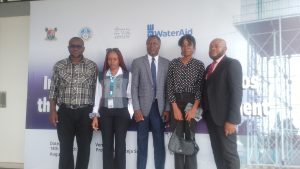
Organised by the LWC with support from WaterAid Nigeria, the forum aims to explore private sector involvement in expanding access to potable water.
Special Adviser to the Governor on the Environment and Water Resources, Mr. Rotimi Akodu, described the initiative as a crucial step to meet Lagos’ growing water demand, driven by rapid urbanisation and population growth. He stressed that achieving universal access to clean water would require substantial capital investment and operational efficiency—both of which PPP could deliver.

Permanent Secretary, Office of Drainage Services and Water Resources, Mr. Mahamood Adegbite, acknowledged strides made in expanding water infrastructure but listed challenges such as climate change and ageing facilities. “We urge stakeholders to support and embrace this new structure for the greater good of our citizens,” he said.
Similarly, Permanent Secretary, Office of Environmental Services, Dr. Omobolaji Gaji, highlighted declining foreign funding for the sector, noting that private investment had become imperative. “There is no better time to partner with the private sector to bring in funding and improve water services than now,” he said.
Managing Director of the LWC, Engineer Mukhtaar Tijani, reiterated the government’s vision to transform the water sector into a modern, efficient, and sustainable system capable of meeting current and future needs while aligning with global best practices.
Tijani clarified that the PPP initiative was not an attempt to privatise water resources but a strategic collaboration to improve service quality, expand coverage, and ensure financial viability. “The decision to pilot the model through selected mini and micro waterworks is guided by the need to leverage private sector expertise, innovation, and funding,” he explained.
He assured that the state would maintain transparent procurement and robust regulatory oversight, with the Lagos Water Regulatory Commission working alongside the LWC to monitor concessionaires, test water quality, and protect consumers. On affordability, Tijani said economies of scale would bring down costs, making clean water more accessible than current private supplies.
He also addressed public concerns over paying for water, noting that many residents already spend heavily on boreholes and tanker supplies of uncertain quality. “We are ensuring that we’re giving you the best quality water… affordability will be much better than the current one as a result of the economies of scale,” he added.
Country Director of WaterAid Nigeria, Evelyn Mere, urged the government to adopt the Akilo Water Scheme management model for sustainable urban water supply. With Lagos meeting only 40% of its water demand and over 48 micro-water schemes lying dormant, she said rehabilitating such facilities through PPP could revolutionise the sector.
WaterAid, she revealed, had rehabilitated the Akilo scheme as a demonstration of what is possible with technical input, effective management, and private sector operation. “If we achieve this successfully, we have created the basis for the government to take on the additional 47 micro-schemes waiting and bring all of them back to life,” she said.
Mere stressed that while water is essential, it is also an economic good that requires investment in infrastructure, treatment, and maintenance. She argued that non-payment for water leads to system collapse, adding that an inclusion strategy was necessary to ensure low-income residents were not left behind. “In the Lagos WASH Policy approved in 2024, there’s actually provision for that,” she noted.
The pilot PPP is expected to cover seven locations, with each designed to meet community-specific needs. Stakeholders at the forum agreed that beyond infrastructure, the success of the initiative would depend on public awareness, regulatory enforcement, and a clear commitment to balancing availability, affordability, and quality.
The two-day engagement will continue with technical sessions and breakout discussions aimed at fine-tuning the framework for private sector participation in water delivery, ensuring Lagos moves closer to universal access to safe and affordable water.