 National Wire About Nigerians, Nigerian Business and Other Stories


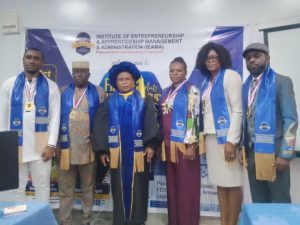
The Institute of Entrepreneurship and Apprenticeship Management and Administration (IEAMA) has been inaugurated in Lagos to formalize and strengthen Nigeria’s indigenous apprenticeship system inspired by the Igbo model.
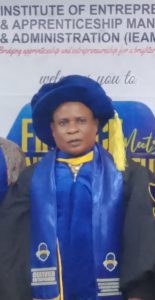
At the event in FESTAC Town, Lagos, Acting Registrar Dr. Jerry Ibeh said the institute was birthed to institutionalize mentorship, training, and financial support for young entrepreneurs to boost the national economy.
“Our dream is drawn from the Igbo boys’ system. They are the bedrock of Nigeria’s economy. At places like Alaba International Market, young people are trained by mentors who later empower them to start their own businesses,” he explained. “However, this system has not been formalized, and that’s the gap we want to fill.”
Ibeh said IEAMA would build capacity through structured weekend training and connections with financial institutions. “We want to be the institute that builds the next generation of entrepreneurs. We already have student, associate, and corporate membership categories to train and mentor both the educated and non-educated.”
He noted that the institute’s programs will extend to the South-East before the end of the year. “We are meeting entrepreneurs in Owerri on December 23 to roll out our plans officially. These trainings will also resolve issues between apprentices and their masters by providing mediation and formal education.”
Ibeh emphasized that IEAMA is not an ethnic project.
“Although we were inspired by the Igbo model, our members cut across tribes. Most of our speakers today are Yoruba. Knowledge is universal; we’re building entrepreneurs, not tribes.”
He said the institute aims to present 500 members to the National Assembly within two years and is currently offering open membership to meet that target.
“We’ve laid a good foundation. By 2026, our governing council will be constituted, and we plan to expand our activities to Abuja,” he said.
Microfinance Banks Key to Nigeria’s Growth — Dr. Adebosin
Delivering the main lecture titled “Microfinance Banks as Catalysts for SMME and Entrepreneurial Growth in Nigeria’s Economy,” Dr. Adebosin Gbadebo Walid highlighted the importance of financial inclusion in national development.
He recalled the evolution of people-centered banking in Nigeria — from the People’s Bank to Community Banks and now Microfinance Banks (MFBs) — stressing their role in supporting entrepreneurs.
“Without finance, there can’t be any business. Microfinance banks have been the backbone of SMEs, which represent about 96% of Nigerian businesses and contribute nearly half of our GDP,” he said.
Adebosin explained that the Federal Government provides intervention funds to microfinance banks, which in turn lend to small enterprises.
“If big players like Dangote rely on loans to expand, how much more small businesses? These banks help traders, PoS operators, and artisans who create jobs and reduce poverty.”
He urged entrepreneurs to take advantage of available MFB facilities and the government to continue supporting the sector through favorable policies.
Entrepreneurship Is Ministry — Dr. Edwin Nwabaku
Among those decorated with IEAMA’s doctorate was Dr. Edwin Ashibudike Nwabaku, a pastor and businessman who said the program deepened his understanding of entrepreneurship.
“Every pastor is a businessman because life itself is a business,” he said stating that, “Until you approach life with purpose and strategy, nothing happens. We must empower our church members so they are not dependent. A pastor shouldn’t live off his members — he should train them to be self-reliant.”
Nwabaku said he plans to integrate IEAMA programs into his church’s empowerment initiatives.
“By next week, we’ll launch our empowerment program and invite the institute’s president. I’ll encourage my members to register so that they can gain entrepreneurial knowledge and practical skills,” he said.
He challenged church leaders to focus on empowerment rather than rhetoric.
“Preaching is not enough. Transformation of lives is the real ministry. Start from where you are — if everyone does that, Nigeria will become a better place.”
Entrepreneurs Need Financial Knowledge — Dr. Umesegha Joshua Obinna
Another recipient, Dr. Umesegha Joshua Obinna, CEO of Prospera Financing Limited, described IEAMA as a platform that bridges finance and enterprise.
“I didn’t know there was a body recognizing entrepreneurs and financiers like this,” he said. “Growth is about how you utilize funds and opportunities. Your business in 2010 should not be at the same level as in 2025 — there must be projection.”
He said the institute broadened his understanding of financial management and business sustainability.
“It has helped us understand financial terms and how to stabilize our businesses for the long run. Regardless of age or tribe, I recommend this institute to everyone serious about business growth. It’s a platform for collaboration and diversification of knowledge.”
Women Must Take Their Place in Business — Dr. Adeogun Mojisola
For Dr. Adeogun Mojisola Abigail, a chartered banker and microfinance operator, being honored by the institute was a major motivation.
“I’m happy as a young woman in Nigeria because women’s voices are still not loud enough in business,” she said. “This recognition shows that we are coming up, and it’s a big win for me and my family.”
She stressed that lack of financial knowledge has limited many entrepreneurs.
“Many business owners suffer because they lack basic financial literacy. This kind of training can change that. If the government supports initiatives like this, entrepreneurs will grow, collaborate, and meet the needs of society.”
On how microfinance banks can help the common man, she said, “Microfinance banks were created to empower people through small loans and business support. They play a major role in building capacity and boosting small-scale businesses.”
Adeogun explained that compliance with regulations is key for government assistance.
“If a microfinance bank follows CBN regulations, it will earn government trust and promotion. Those that perform well move from tier to tier until they reach national recognition,” she noted.
She also discussed how her bank handles loan defaults.
“Every bank registers with the NDIC for insurance coverage. If a client’s business suffers due to fire, death, or other disasters, insurance steps in. When a client defaults for other reasons, we first understand the situation and may restructure the loan. Only when the problem is beyond our control does insurance take over.”
Building the Next Generation of Entrepreneurs
IEAMA’s inauguration marked the start of a journey to merge traditional mentorship with modern entrepreneurship. The body seeks to create a structured pathway where informal apprentices can gain formal education, certification, and access to finance.
Dr. Ibeh said the institute’s goal is to ensure that traditional entrepreneurial practices like the Igbo apprenticeship system are not lost but refined to meet present realities.
“There’s a difference between entrepreneurial skill and entrepreneurial knowledge,” he said. “We’re focusing on knowledge — exposing people to digital marketing, modern tools, and innovation. Many don’t know they can run businesses from their homes. We want to give them that knowledge.”
He noted that IEAMA’s membership structure allows growth from student to fellow level, ensuring continuity and mentorship. “A student member today can grow to become a fellow tomorrow,” he added.
According to him, IEAMA will work with ministries and financial institutions to organize empowerment programs and partnerships that will make entrepreneurship accessible.
“We are bridging the gap between informal traders and the formal economy. By connecting them with microfinance institutions and teaching them record-keeping, marketing, and innovation, we can transform livelihoods,” Ibeh said.
He added that IEAMA also plans to collaborate with the National Youth Service Corps (NYSC) to train corps members in entrepreneurship.
“Many young people don’t realize they can start and run profitable ventures from their corners. We’re helping them gain that mindset and capacity,” he said.
The Acting Registrar expressed optimism about Nigeria’s future.
“If we formalize our informal sector, we’ll grow faster. These local entrepreneurs are our real economy. What they need is structure, mentorship, and financial discipline — and that’s what IEAMA stands for.”
The inauguration of the Institute of Entrepreneurship and Apprenticeship Management and Administration (IEAMA) marks a critical step in formalizing Nigeria’s indigenous apprenticeship model. From training young entrepreneurs to connecting them with microfinance opportunities, IEAMA envisions a future where local enterprise drives sustainable economic development.
Report by Dayo Emmanuel