 National Wire About Nigerians, Nigerian Business and Other Stories


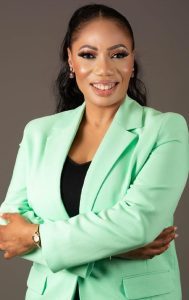
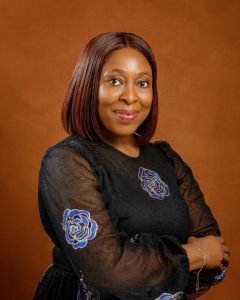
Dr. Eme A. Dada, Deputy Director at the Central Bank of Nigeria
On creating a fairer society, Dr. Dada stresses deliberate action and mindset change. “We need equal access to quality education and economic opportunities, stronger laws to protect women from discrimination and violence, and greater participation of women in leadership and decision-making,” she says. She also underlines the importance of fostering a culture of respect, inclusion, and fairness so every woman and girl can reach her potential. Sharing her personal journey, she recalls, “Early in my career, I found myself in rooms where there were very few women, and expectations were often higher. Rather than see it as a barrier, I saw it as a responsibility to be well prepared and to let the quality of my work speak for itself.” That experience reinforced her belief that competence, confidence, and integrity are key, and it strengthened her commitment to mentoring younger women. Her advice to girls and young women is clear: “Find a mentor. Believe in your potential and never limit your aspirations. Pursue excellence, remain disciplined, and continue to invest in learning and personal growth. Most importantly, allow God to lead you, value relationships, and open doors for other women and girls to thrive. With courage, integrity, and perseverance, there is no limit to the heights you can reach.”
Nkechi Loveth Ezere, a fashion designer, affirms this year’s IWD theme, speaks to the need to recognize the struggles women and girls face across the world and take deliberate steps to address them. According to her, “this year’s theme is about recognizing the struggles women and girls face globally and taking concrete actions to address them. It is about equality, empowerment and justice for women and girls.” Reflecting on the rights of women today, she said what stands out the most is the wide gap between what women deserve and what they actually experience in society. “What stands out most is the gap between what women deserve and what they often get, especially in opportunities and treatment. We have women changing things in tech and politics, yet many of them are still fighting for equal pay and for an end to violence against women,” she said.
Speaking on the kind of actions needed to create a fairer society for women and girls, Ezere stressed the importance of education, awareness and policy reforms. “Education is very important people need to be educated about the rights women have. Awareness also matters, spreading information about women’s struggles so that people understand and care about it,” she said, adding that supportive policies and stronger backing for women-led initiatives would also help women progress. Sharing an experience that shaped her perspective as a woman, she pointed to societal expectations placed on women. “I realized how society often expects women to behave in certain ways or follow certain roles, and those expectations can limit women. For instance, society may expect a woman to focus only on family instead of a career, or to remain polite instead of speaking up when she is hurt.” She encouraged young girls not to allow such expectations define them. “To young girls, I would say dream big and do not allow anyone to dim your light or tell you otherwise.”
Dupe Ajayi, a Community Orientation and Mobilization Officer (COMO) with the National Orientation Agency, note that this year’s IWD theme, speaks directly to the need for fairness and equal opportunities for women in society. “To me, it means equal access to the social justice system in the society,” she says. “It includes equal rights to opportunities, health, resources and fair treatment, while also bridging the gap that exists between genders.” Ajayi adds that the theme also calls for a stronger commitment to gender equity in all areas of life. Speaking on what stands out most when discussing the rights of women and girls, she stresses the importance of education and safety. “Education and safety are paramount,” she explains. “When a girl or woman is educated, a whole nation is educated. It becomes a chain that spreads and grows unstoppably.” She adds that safety is equally important because it gives women the freedom to express themselves without fear or intimidation in different professions and levels of leadership, while also helping to eliminate violence and discrimination against women.
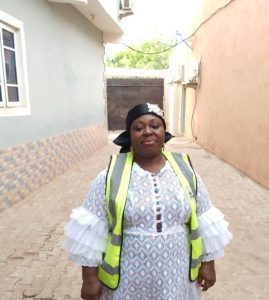
Highlighting actions that can help create a fairer society for women and girls, Ajayi points to the need for structural and social changes. “There should be a total end to discrimination against women in all sectors of society,” she says. “We also need increased female representation in leadership positions having a woman president is not a crime.” She also advocates free education and improved access to educational services for the girl child, especially in rural communities, as well as expanded healthcare systems that allow women and girls in remote areas to access medical services easily. Reflecting on an experience that shaped her perspective as a woman, Ajayi recalls how her professional journey transformed her outlook. “When I was younger, I used to think women could not thrive in gatherings dominated by men, especially intellectually,” she says. “But my job as a Community Orientation and Mobilization Officer changed that mindset.” She recounts being posted to a local government area where she was the only woman among council members, royal fathers and cabinet members making decisions for community development. “It took courage, determination, commitment and focus for me to stand up and speak, offering suggestions I believed could make a difference,” she says. “That experience shaped my perspective and showed me that women can thrive and even excel in any field when they are given the opportunity.”
Olusola Agbalu, a Professional Accountant and Broadcast Journalist, points out that the theme of this year’s IWD theme, begins with recognizing the basic entitlements of women and girls in society. “Rights, to me, begin with the fundamental entitlement of the girl child and women to education at every level,” she says. “Every girl deserves the opportunity to learn, grow and pursue knowledge without barriers.” She also believes women have the right to dignity in how they present themselves. “No woman should be forced to dress in a sexually suggestive way simply to attract customers for someone else’s business,” she explains. “For instance, a service girl working in a bar where drinks are served should not be compelled to dress indecently simply to satisfy commercial interests.” Speaking on justice, Agbalu says it means correcting the wrongs done to women and girls and ensuring that the law protects them. “When a child or a woman is abused, justice must be pursued through the courts and the law must speak clearly in their defense,” she says. She also points to the double standards women often face in society. “For example, when a woman leaves her marriage because her husband cheats on her, she is often condemned, yet when a man leaves his marriage because his wife cheats, he is usually supported and sympathized with. True justice means judging both men and women by the same standards.”
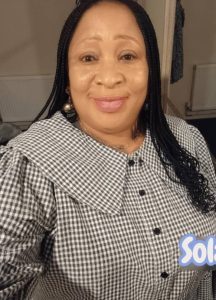
According to her, action towards building a fairer society must begin with equality and inclusion. “Action means treating girls and boys, and women and men, with equality. The same rules and laws should guide everyone’s conduct,” she says. She adds that women must also be empowered to take part in decisions that affect their families and their future. “For me, this includes having the ability and opportunity to make important decisions that benefit my children, such as choosing the right schools for them from primary through secondary school and even to university.” Reflecting on her own journey, Agbalu says her perspective as a woman has been shaped by balancing career and motherhood. “Combining a career with the responsibilities of managing a home and raising children from infancy to young adulthood has given me a deeper understanding of the strength, patience and wisdom women must develop,” she says. “Motherhood and work together require balance, sacrifice and resilience.” She believes women can continue to grow while raising children and remain relevant enough to guide them. “Even while raising children through different stages of life, a woman can continue to grow, learn and stay relevant enough to guide and advise them in ways that connect with their generation.” Offering a message to girls and women, she says: “Take education seriously. Education is light. It opens the door to a world of limitless opportunities.”
Eleleonu Esther Chimezie, a farmer and businesswoman, signal that this year’s IWD theme, speaks to the freedom for women to live, express themselves, and pursue opportunities without societal judgment or restriction. “It means to me that a woman can express, live, and do things like the other gender without being questioned or constantly reminded to ‘be a woman,’” she says. “It also means that a woman’s voice is heard when she cries out, without feeling ashamed or silenced by society.” When asked what stands out most about the rights of women and girls today, she emphasizes the need to treat them as human beings, deserving of respect and fairness. “The ability to treat women and the girl child as human,” she says, “is what matters most.” She believes that actions to create a fairer society should start at home. “It should begin with the immediate family,” she explains. “Parents must teach their children equally, without expecting the girl child alone to do the house chores while the boy child is excused.”
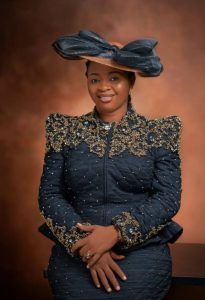
Reflecting on experiences that shaped her perspective, Chimezie shares lessons from observing family dynamics. “A moment that shaped my perspective as a woman was when I saw my in-law doing many things in the house, providing for the family and taking care of its needs without worrying about who would talk down on her,” she says. “I also saw another family where the wife was the breadwinner, yet the husband could not even lift a cup of water for her, claiming he is the man of the house. The woman lived in pain and regret.” From these experiences, she learned the importance of raising children without gender biases. “We parents have to start early in training our children equally, because a peaceful home leads to a peaceful society,” she says. Her advice to young girls is empowering and practical: “Do not be lazy and wait for a man or husband to provide for you. Start up and work. Prioritize yourself first. Do not allow marriage or anything else to make you give up your dreams. Pursue your dreams, and you will conquer.”
Dr. Okunseinde Adesola Felicia, a National Officer of the Ogun State Female Artisans, indicates this year’s IWD theme, is a strong call for women and girls to demand fairness and accountability. “To me, it means this is the time for justice and action for every girl child, whether adult or young,” she says. “It is time for women to speak up and get justice. Enough of keeping quiet and allowing our matters to be swept under the carpet.” Reflecting on the progress made in the struggle for women’s rights, she says there are signs of improvement. “We are getting there gradually,” she explains. “Women are more educated now and more exposed, and they are beginning to understand what rights truly mean in real terms.” However, she emphasizes that the struggle for women’s rights should not be seen as a competition with men. “It is not about competing with men but about knowing your worth as a woman,” she says. “There is nothing a man can do that a woman cannot do better. A woman’s right is not limited she owns her world, she owns her home, she owns her children and everything around her. There should be freedom in every angle, no limitations and no boundaries to what she can achieve, while still having her family by her side.”
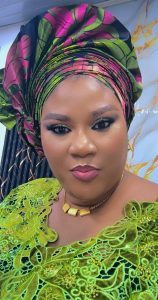
Speaking on the kind of actions that can help create a fairer society for women and girls, Dr. Okunseinde stresses the importance of awareness and empowerment. “We must create enough awareness through campaigns and advocacy that support women,” she says. “Women also need to be empowered financially so they can become who they truly want to be.” She also shares a personal experience that shaped her perspective as a woman. “When I lost my aunt who was emotionally abused by her husband, it changed my thinking,” she recalls. “She worked so hard, but in the end she did not reap all that she had sown.” According to her, that painful experience left a lasting lesson. “Her last breath shaped my mind,” she says. “It taught me to be contented, to stay focused and to always be whom I truly am.” She adds a message for women and girls striving to find their voice and purpose. “Be who you are and do not stop until you achieve your goals in life,” she says. “Always strive to be at your best.”
Afolake Abegunde, a Business Administration Executive at Cartracker Nigeria, cite this year’s IWD theme, as a call to move beyond words and take responsibility for creating real change. “To me, this theme is a powerful reminder that advocating for women is not only about recognition, but about ensuring that women and girls truly experience their rights in everyday life,” she says. She explains that rights mean protection and equal opportunity, justice means that when a woman is wronged the system stands firmly for her, and action requires that society, governments, institutions, and individuals actively work to create an environment where women are safe, respected, and empowered. “Personally, it speaks to my belief that every woman and girl deserves dignity, fairness, and the freedom to pursue her dreams without fear or limitation,” she adds. Reflecting on the current state of women’s rights, she says, “What stands out to me the most is how often women still have to fight for things that should naturally be theirs. Many women continue to face unfair treatment in different areas of life.” She highlights the plight of single mothers, saying, “One issue that deeply concerns me is the number of single mothers who are left to raise children alone because some men refuse to take responsibility after fathering a child. This is not just a personal issue. It is a societal one.”
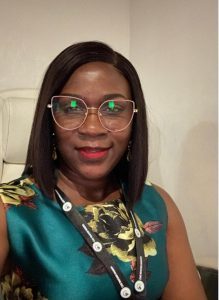
Speaking on actions that can help create a fairer society for women and girls, Abegunde emphasizes the need for both structural reforms and community support. “Creating a fairer society requires intentional action from both institutions and individuals,” she says. “First, there must be stronger laws that protect women and ensure accountability, especially in cases where men abandon their responsibilities.” She also stresses the importance of education and mentorship. “When girls are taught to believe in themselves, pursue education, and develop strong values, they are better equipped to shape their futures,” she says. She adds that women must support one another, because unity amplifies voices and drives meaningful change. Sharing how her experiences as a mother and professional shaped her perspective, she says, “Being a mother has strengthened my awareness of the need to build a safer and fairer world for the next generation of girls. It has made me more conscious of the importance of justice, accountability, and opportunity for women.” Her advice to young girls is empowering: “Believe in yourself and the greatness within you. Do not allow society to define your worth or limit your dreams. Stand together with other women, support one another, and refuse to accept any path that diminishes your dignity. Dream big, prioritize yourself first, and pursue your dreams and you will conquer.”
Adewumi Gbadebo, a corporate professional, state that this year’s International Women’s Day theme, carries profound meaning. “Its message goes beyond gender; it speaks to the fundamental idea of human rights and collective responsibility,” she says. “When individuals truly understand their rights as human beings, they are less likely to advocate only for themselves. Instead, they become voices for justice and fairness for everyone around them.” She emphasizes that the words Rights, Justice, and Action are more than ideals they are a call to responsibility. “They remind us that each person has a role to play in shaping a more equitable society. Being aware of injustice is not enough; we must also be willing to act and become change agents within our communities, workplaces, and institutions.” Gbadebo is encouraged by the growing awareness around gender equality, noting that education and empowerment of the girl child are gaining increasing commitment globally.
“Education remains one of the most powerful tools for breaking barriers and creating opportunities for future generations,” she says. She adds that building a fair society requires a shift in mindset. “We must begin to see one another first as human beings, deserving of dignity, respect, and equal opportunity. When we treat others with the same fairness and consideration we desire for ourselves, we lay the foundation for a society where everyone can thrive.”
Reflecting on personal experiences that shaped her perspective as a woman, Gbadebo highlights the transformative power of motherhood. “One of the most transformative experiences for many women is childbirth. One moment, you are pregnant; the next, you are holding a new life in your arms,” she says. “From that moment onward, every day becomes a new journey of responsibility, love, and growth.” She explains that parenthood does not end as children grow older. “Even as they become adults, a parent’s concern and care remain constant. The experience becomes even more complex when there is more than one child, as a mother strives to give each child equal love, attention, and guidance.” She adds, “Childbirth and motherhood often redefine a woman’s identity and strength. Despite the challenges and sacrifices, many women willingly embrace the experience repeatedly in their journey to build and nurture a family. It is a testament to resilience, courage, and unconditional love.” Gbadebo believes that women deserve not only recognition but consistent celebration. “Their contributions to families, communities, and society at large shape the world in meaningful ways. International Women’s Day serves as a reminder that acknowledging and supporting women is not a one-day event, but an ongoing commitment to justice, equality, and shared humanity.”
Oluwaseyi Elizabeth Jimoh, a poet, multimedia award-winning journalist, freelance reporter with Radio Nigeria Positive FM, and founder of Jobeth Media, describes International Women’s Day as a significant moment to recognize the value and contributions of women. “International Women’s Day is a special day celebrated on March 8, and it recognizes the fact that women are special. Their uniqueness should not sideline them; rather, it should make society accommodate them instead of demeaning them,” she says. Reflecting on the theme, Jimoh breaks down its meaning from her perspective. “Rights are the freedoms and protections every human being is entitled to, and women and girls must also enjoy those freedoms,” she explains. “These rights allow people to live with dignity and fairness rights to life, education, and freedom of speech.” However, she notes that many women still face silence and marginalization in society. “In our contemporary time, women are often silenced and marginalized,” she says, pointing to online harassment and misogyny women sometimes face when speaking out against issues such as sexual violence. On justice, she stresses fairness and accountability. “Justice means people are treated equally according to the law and wrong actions are punished,” she says. “But can we truly say women receive justice when they are harmed? Often, the answer is no.” She adds that action is the most critical part of the theme. “Action means doing something rather than just talking about it. Policies and statements are not enough if they are not implemented in real life.” She also references global concerns about gender inequality. “Reports have shown that women and girls continue to experience discrimination that affects their health, access to education, employment, and financial resources,” she says. “So when I think about this theme personally, I believe women’s rights to education, health, life, and protection must not only exist on paper but must be implemented, and justice must be served equally.”
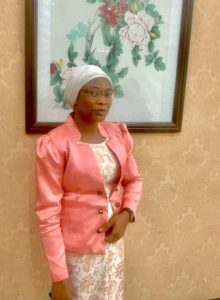
Speaking about what stands out most regarding the rights of women and girls today, Jimoh points to the persistent gap in equality. “One thing that stands out to me is that no nation has completely closed the legal gap between men and women,” she says. “Right now, women have only about 64 percent of the legal rights that men hold worldwide.” She highlights workplace discrimination, especially around maternity and career progression. “Imagine a woman who takes maternity leave to give birth and care for a child, and when she returns her male counterpart has been promoted simply because she was away,” she says. “Why should a woman’s career suffer because she carried and nurtured another life?” According to her, women often carry additional responsibilities yet face limitations in pay and opportunities. “Being a woman comes with added responsibilities, and that should never be a reason to diminish our pay or professional growth,” she says.
On actions needed to build a fairer society, she emphasizes equal pay and equal opportunities. “Women and girls should receive equal pay for equal work and should not be sidelined because of biological responsibilities such as childbirth,” she explains, adding that governments, policymakers, and institutions must ensure supportive policies and fair workplace structures. Reflecting on what shaped her perspective as a woman, Jimoh draws inspiration from her faith. “When God created the world, He said everything was good, but later He said it was not good for man to be alone,” she says. “That moment reminds me that women were brought into the scene with purpose to provide help, insight, and solutions.” She believes women should recognize their strength and purpose in society. “We are not inferior or second-class citizens. We were created to contribute meaningfully and bring solutions where they are needed.” Her advice to young girls is rooted in identity and purpose. “Look up to your Creator and discover the purpose for which you were made,” she says. “Do not allow society to define your identity or limit your potential. Understand that you came into the world to fulfill important responsibilities and to help build a better society.”
Comfort Omolayo Okunola, an Early Life Development Coach, views this year’s theme, as a strong call to protect and empower young girls, especially those whose voices are often unheard. “This theme is a call to deepen our commitment to protecting, empowering, and uplifting every girl,” she says. Drawing from her experience as a Girls’ Early Growth and Development Coach and early birth educator for more than a decade, she explains that the theme reinforces her belief that every girl deserves a supportive environment. “Every girl deserves a safe space where she can thrive, learn, and build resilience,” she says. According to her, safeguarding and child protection should never be treated as optional responsibilities. “Safeguarding and child protection are not optional; they are rights,” she stresses. “Justice for girls means they grow in environments free from abuse, silence, and fear, while action means we step forward every day to protect their emotional, physical, and psychological well-being.” She notes that one issue that stands out strongly to her is the continued struggle many girls face in accessing basic safety and dignity. “Girls are still fighting for safety and dignity in spaces where they should already be protected,” she says. “The right to education, bodily autonomy, the right to be heard, and the right to feel safe are still not guaranteed for many girls around the world.” From her daily work mentoring young girls, she has seen the impact of guidance and support. “Early guidance, mentorship, and a protective environment can completely transform a girl’s life,” she says. “Their rights must go beyond paper; they must be embedded in our homes, schools, communities, and systems.”
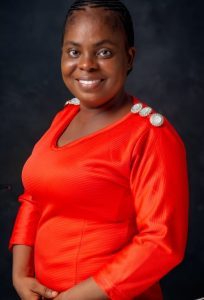
Speaking on actions that can help build a fairer society for women and girls, Okunola emphasizes the need for intentional and consistent efforts. “A fairer society begins with strengthening child protection systems so girls are safe at home, in school, online, and in society,” she says. She also highlights the importance of building resilience early and educating those responsible for raising children. “We must teach girls resilience so they can advocate for themselves, and we must train parents, caregivers, and educators on safeguarding, emotional intelligence, and positive discipline.” According to her, creating safe spaces for girls to speak freely and learn leadership skills is equally important. “We must challenge harmful norms that silence girls and support mentorship programmes that show them what is possible,” she adds. Reflecting on an experience that shaped her perspective, she recalls witnessing a young girl’s transformation through encouragement and guidance. “I once saw a young girl who was timid and unsure of herself become confident and bold simply because an adult believed in her and listened to her,” she says. “That moment reminded me that girls do not lack potential; sometimes they only lack protection and someone who believes in them.” That experience strengthened her resolve to support girls on their journey. Offering a message to young girls who look up to her, she says: “You are valuable. You are capable. And you have the right to dream boldly.” She adds, “Protect your heart, your mind, and your future. Surround yourself with people who see the greatness in you, even before you see it in yourself. Never let fear silence your voice, and never stop believing that you are worthy of respect, safety, and opportunity.”
Taken together, the reflections from these women show that the conversation about women’s rights is not just about policies or annual celebrations, but about everyday realities. Their stories point to the progress that has been made, while also reminding us that many women and girls still face barriers that limit their opportunities, safety and voices. From education and leadership to justice and economic independence, each of them emphasizes that real change requires consistent effort from families, communities, institutions and governments alike.
As International Women’s Day is marked this year, their words serve as both encouragement and a challenge. Encouragement for girls and women to believe in their worth, pursue their dreams and support one another, and a challenge to society to create environments where those dreams can truly thrive. When women are given the space to speak, lead and contribute, their voices do more than inspire change they help shape a fairer and more inclusive future for everyone.