 National Wire About Nigerians, Nigerian Business and Other Stories


I marked my birthday by spending time with children at the Satus Dingus Child Rescue Initiative in Ibadan, Oyo State, a home dedicated to rescuing homeless children and giving them hope for the future. I arrived during siesta hours and waited, using the time to complete the visitors’ register and reconnect with the home’s handlers. My last visit was several years ago, so much had changed. After the children woke, I began asking about some of those I met years ago. Then came a surprise: Wariz. The small boy I once knew is now grown and in SS2. I was asking for Wariz from Wariz, obviously I couldn’t recognise him again though the name stuck. He is now an international chess player who represented Nigeria in Uzbekistan last year. I played a game with one of the smart children after which I had a chat with Wariz. Read the story below.
From Mokola to Uzbekistan: How Former Street Child Found Hope Through Chess at Satus Dingus
At the age of 10, Wariz Muftau had no classroom, no primary school certificate and no clear future. Like many abandoned children, he roamed the streets of Mokola area of Ibadan, surviving day by day without hope of formal education or stability. Seven years later, the teenager is a Senior Secondary School student who has represented Nigeria in international chess tournaments, including a global championship in Uzbekistan.
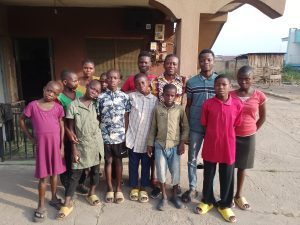
Muftau’s journey from the streets to the global chess arena began when he was rescued by the Satus Dingus Child Rescue Initiative (SDCRI), an Ibadan-based home that rehabilitates homeless children and reintegrates them into the society through education, mentorship and vocational skills.
Before his rescue, Muftau had spent most of his early childhood on the streets, without access to schooling or adult care. Without intervention, his chances of acquiring basic education were slim. That trajectory changed when he was picked up from Mokola by Mr. Tomide, who facilitated his admission into the child rescue home.
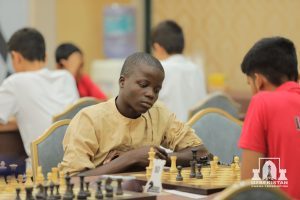
“I was picked from Mokola in the street when I was 10 years old,” Muftau recalled. “I’m now 17 and in SS2. I like to be a mechanical engineer.”
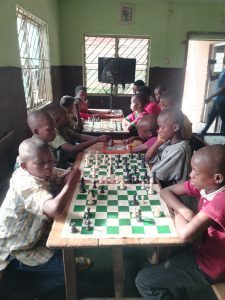
At the Satus Dingus home, Muftau was reintroduced to formal education and exposed to chess, a game that would later redefine his life. According to the organisers, chess is a core part of the home’s development programme, used to sharpen critical thinking, discipline and confidence among the children.
Muftau showed an early aptitude for the game and quickly distinguished himself among his peers. His progress soon earned him opportunities beyond the walls of the home. He first represented Nigeria at a chess competition in Ghana, marking his debut on the international stage.
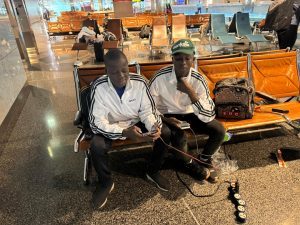
His most remarkable experience came in 2024, when he was selected among Nigerian players to compete at a championship in Uzbekistan after qualifying through a national tournament in Lagos.
“I participated for my school at the Ecobank Chess Tournament in Lagos. It is a yearly competition,” he said.
According to him, the Lagos competition featured seven rounds. “We won six and lost one to qualify to represent Nigeria in Uzbekistan,” he explained.
Following their qualification, the team returned to Ibadan to prepare for the international tournament. “We spent two weeks preparing after winning in Lagos,” Muftau said, stating that while he had traveled abroad before, the Uzbekistan experience felt different.
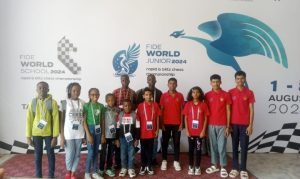
“I wasn’t too excited at first because I had traveled to Ghana to compete before, but the treatment this time was different. I was thinking, let this thing continue so we can be going every year,” he said.
The journey to Central Asia was itself an eye-opener for the teenager. The team flew from Nigeria to Qatar before proceeding to Uzbekistan, a trip that took about 13 hours in total.
“We went from Nigeria to Qatar because we used Qatar Air. We didn’t go directly to Uzbekistan. We flew nine hours to Qatar and four hours to Uzbekistan,” he said.
Accompanied by their coach, Bode Sofoluwe, who served as their guide, the Nigerian team encountered cultural experiences that left lasting impressions on Muftau.
“In Uzbekistan, you must have a reason to be there. We were the only black people there and they were all white people just looking at us,” he recounted. “Their food was strange to me. No pepper. Only tomatoes, leaves and bread. We spent a week. Whenever they brought food we couldn’t eat, we would just take fruits.”
Although the Nigerian team did not win the tournament, Muftau described the competition as unforgettable. The championship featured participants from 15 countries, divided into age categories including Under-9, Under-11, Under-13, Under-15 and Under-17.
“We played 14 games in all,” he said.
Beyond medals and rankings, Muftau believes chess has given him confidence, exposure and mental discipline. He now encourages young people, especially those with access to training opportunities, to take the game seriously.
“My advice for children like me who have opportunities to learn chess is to take it seriously,” he said. “It can take them round the world like I have traveled. It will also develop their mental health and make them smart and think fast.”
He admitted that learning chess was not easy initially but said persistence made the difference. “It was not easy for me when I was learning it, but because of my interest I developed a passion and I was able to learn it,” he added.
The Satus Dingus Child Rescue Initiative, which runs the Ibadan home, has continued to play a critical role in transforming the lives of street children. The initiative provides shelter, education and mentorship, using tools such as chess and vocational training to help children find purpose and direction.
Founded by Biodun Bamgboye, who serves as its director, the initiative began as an idea nurtured over many years before becoming a reality. Since its establishment, the project has rescued numerous children from the streets, many of whom have gone on to build stable lives through education and skills acquisition.
For Muftau, the transformation from a street child in Mokola to an international chess player stands as a powerful example of what targeted intervention and opportunity can achieve.
According to the organisation, SDCRI depends on donations form well meaning individuals, many of who have been consistent over the years. The home is opened to more support to be able to adopt more vulnerable children from the streets.
Story by Dayo Emmanuel
To support the initiative:
Zenith Bank Account 1014993887
Satus Dignus Child Rescue Initiative
Follow SDCRI on IG: @satusdignuscri