 National Wire About Nigerians, Nigerian Business and Other Stories


The Centre for Children’s Health Education, Orientation and Protection (CEE-HOPE) has commemorated the International Day of Zero Tolerance for Female Genital Mutilation in Lagos.
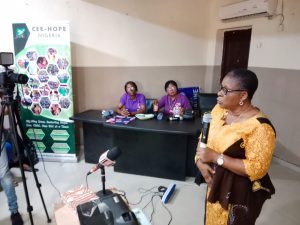 Welcoming participants at the event held at the International Press Centre, Ogba, Lagos, on Monday, Executive Director of CEE-HOPE, Betty Abah said, Female Genital Mutilation is a human rights violation and the world especially Africa must stand against it.
“Female Genital Multilation is a human rights violation, it doesnt stop anything they claim it stops because when you circumcise a girl and you say you dont want her to be promiscuous, that is what will make her promiscuous becaue she would not be satisfied by one man and it will worsen the situation,” she said.
Stating further, she said the practice is a very dangerous one which has led to unnecessary loss of lives.
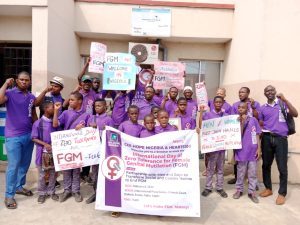 “Why it is even more dangerous is because so many girls every year are being lost due to loss of blood; many bleed to death,” she said, adding that, “Sadly enough, there are women whose profession is to circumcise girls, a very cruel practice.
“They can use one single razor blade on 100 girls and it can spread HIV, so many girls have been infected. This happens in Nigeria, Ghana, Sierra Leone, Guinea, Senegal and most part of West Africa still engage in the barbaric practice.
“It is so bad in Senegal where they sew up girls’ private parts, leaving a little opening for urination. They say it prevents girls from sleeping around. We are not saying people should sleep around, sleeping around is bad and can also spread diseases but the female genital mutilation is barbaric and should stop,” she said.
Guest speaker at the event, Mrs. Bose Ironsi, who is the Executive Director of Women’s Rights and Health Project (WRAP), told participants at the event that the practice is doing more harm than the good those practicing it are preaching.
According to Ironsi, it is a culture that should not be upheld but abolished.
“Those who believe in the female genital multilation are doing more harm than good. When it comes to culture, there are some good cultures that we should emulate.
“For instance, children should respect the elders, people in the society should be kind and help themselves, these and many more are the good cultures we have in Africa that we should encourage but this female gental multilation is a bad culture, it is a culture we dont want and should be rejected. we should jetisson bad cultures and embrace the good ones,” she said.
Meanwhile, she admitted that Nigeria is still ranking high in female genital mutilation.
“I know that Nigeria is still ranking high in prevelence of female gender mutilation. I will not say that not much has been done, a lot has been done because there are many people who are no longer practising it. Some of them have gone underground because the Federal Government has passed a law against it, so people are no longer doing it openly,” she said.
Ironsi however advised that the men should be engaged and made to participate in the advocacy. “Let us engage the men in carrying out the senitisation, let them be part of the advocacy.
“When you hear female genital mutilation, it may be something you are not conversant with, we have decided to better call it female genital multilation because it is not the same thing as circumcision they do for the boys. The one for the boys is the one done for the right reason. The boys are circumcised because they can easiily get infected if they are left uncircumcised and if the infection is not treated, it can affect their kidneys, but for the women, the only reason is because they don’t want women to enjoy what the men are enjoying and another major reason is that they use it to control the women.”
Ironsi, a trained nurse who according to her had taken delivery of about 500 babies, however stated the health implications of female genital multilation.
“When they perfom the mutilation on a woman, the place gets healed-up with time and when it is time for her to deliver her baby, the place that is supposed to open up for the baby to come out easily has been cut off and it prolongs labour. It is supposed to open up to about 10cm but since it has been cut, that is impoossible and labour is prolonged.
“Another implication is that some people’s blood don’t clot fast enough, they can bleed to death when they are cut,” she said.
This explains why many women may have been lost during child birth and according to Ironsi, the act must stop for people to live.
Some participants at the event shared their experiences, advocating a total ban on the practice.
*Story by Dayo Emmanuel