 National Wire About Nigerians, Nigerian Business and Other Stories


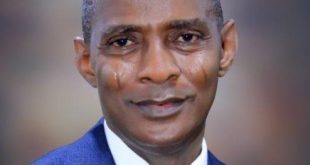
Bishop Omonze E. Mark is a top Chaplain Officer and GOC South West. He talked with DAYO EMMANUEL about the uniqueness of Chaplaincy at the international leadership conference and diplomatic award ceremony organised by the Divine Institute of Chaplaincy Corps International in conjunction with the United Chaplains State of New York, African Region in Lagos. The General also explained the duties of Chaplains and relationship between the voluntary organisation and the armed forces. Excerpts:
Can you tell us what is unique about chaplain corps in Nigeria?
Generally I would talk about chaplain cops and chaplain corps on Nigeria. Basically chaplaincy is the missionary aspect of the church that goes into restricted area. There is difference between chaplain corps and chaplaincy. When you are talking about chaplain corps you are talking about chaplain militaralised. We are actually not paramilitary we are military like all our activities are military like basically because the chaplain is actually a pastor and a priest sent to take care of those who are outside the church in the restricted area. These are people in the hospital, in the prisons, the corporate world, schools etc. The chaplain is to take the care and love of Jesus to the people. The chaplain is a pastor to those people. So we perform practical duties outside the four walls of the church to the world, the market place. So chaplains are those given the rank and the commission to do what others cannot do. A regular pastor may not have access to the army, the police but the chaplain is a fellow officer to the armed forces, he is one who can come into their midst, preach the gospel, counsel and render services, supply help, give aids and all other things.
Since you are military like, how is the training like?
We have training programs which involve class and parade trainings. We have different layers of training, we have a three months basic course which is broken into four different divisions. We have the parade training, we have the chaplain in the secular world. We have the chaplain in the military in class. We have priestly duties of the chaplains as part from the courses. We have several courses we have the three months basic course, we have one year training then we have the professional training. We have degree training. So the chaplain is trained to work professionally. We do military training, we are not soldiers we don’t fight with guns we fight with the Bible. We do parade, we are fit, we do exercises we are fit, we learn communication. We learn signals we learn surveillance just like the police, we learn the rules of war, we learn technology, conflict resolution, crisis management. All these are packaged in our training.
How do the other members of the armed forces perceive you?
When they see us they see us as their pastors and fellow officers. We are fellow officers and we are their pastors, you will see we have rankings. If a junior officer of the police sees me and he recognises my office he pays me full complement and I return it. If I see a senior officer in the police I give him compliment and he returns it.
How can one be a chaplain? Is there a fee attached?
Primarily you know chaplaincy is a voluntary service. First of all a chaplain is supposed to be a pastor or a priest, an evangelist, someone who is involved in the ministry but these days we have extended it to church workers. This is because chaplaincy is about spiritual service so it has to be somebody who is trained to do pastoral services. The person doesn’t have to be a pastor, the person just must have a relationship with God and a passion for service. So, so serious believer with a passion for God and service should be able to be a chaplain. But the person must be able to render spiritual service. We can’t just take somebody from the market, you must be someone who loves the Lord and ready to serve God.
Are there intuitions like Bible colleges, regular universities that you are affiliated to?
We ourselves run our chaplaincy institute. The name of our institution is Divine Institute for Chaplaincy Cops. We run degree courses, we are affiliated to 25 universities, several of themin the United Kingdom endorsed to give certificate to professional chaplains and you can work with the certificates in various countries and be paid.
Why have you not upgraded to have a status of a regular university in Nigeria?
The point is that the core vision of chaplaincy has to be maintained. We run faculties in different locations around the world. We have faculties in Nigeria, Kenya, Dubai and the UK. What happens is that when you do the degree courses with us when it is time to graduate you go to the UK in the university there to graduate with other students after fulfilling all the requirements, so that we don’t deviate from the primary task which is to train and assign chaplain into the field.
I presumed that you’ll be involved in relief operations can you give examples of any of these operations you have been involved in?
Our major focus is orphanages like today’s program there is going to be donations to orphanages. It is also supposed to raise awareness of what chaplaincy is doing and to get encouragement. I also like to answer an earlier question that are there fees attached? Yes there are fees attached to it. We have to train people and that costs money. We have to give uniform and certificate which cost money. We don’t have monthly fees but for you to register you need to pay fees that cover your training, uniform and certificate. Now we have fees for different levels depending on the different training you are going for.
I learnt you are affiliated to various police and military departments around the world can you shed light on this affiliations?
You see the black uniform that is our operational diplomatic uniform. It is universally accepted. You will remember that there was a time our police were using this. If you go to New York you would find that this is what they wear. Then the white is our ceremonial uniform. We run in the South African police, in New York, we run with the NYPD. We are directly affiliated with the United States Army, we have their endorsement, we deal with all these organisations and we want to extend to others like the Nigerian police. We also want to penetrate the Local Governments and the schools.
How easy has it been preaching the gospel among the military?
We have been accepted so far. The chaplains are always accepted and that is the beauty of chaplaincy. If a regular pastor goes to the military it may not be as easy but once you are a chaplain, and you are identified as a chaplain the door is opened to you. Right now we have a base in Kuwait, the Kuwait government who will not allow pastors to come and establish churches allows chaplains to come and set up base. Chaplaincy has access. That is the beauty of it.