 National Wire About Nigerians, Nigerian Business and Other Stories


…calls for policy reform to tackle period poverty
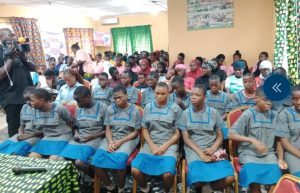
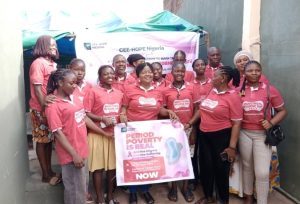
As the world commemorates this year’s International Menstrual Hygiene Day, the Centre for Children’s Health Education, Orientation and Protection (CEE-HOPE) played host to a vibrant and impactful girl-centered conference at its headquarters in Lagos.
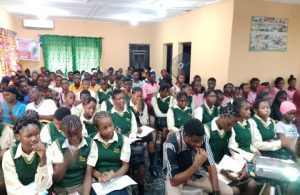
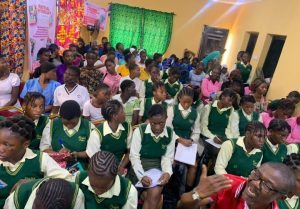
The event held 28th May 28 at Dr. Nnimmo Bassey Conference Hall in CEE-HOPE’s House, Lagos, brought together approximately 120 schoolgirls from ten schools across Lagos and Ogun States, creating a unique space for learning, advocacy, and inspiration.
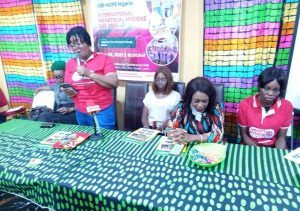
With this year’s theme centering around menstrual hygiene and dignity, the gathering was more than just a symbolic event—it was a rallying cry against the harsh realities of period poverty in Nigeria, especially its consequences on girls’ education, health, and personal development.
In her opening address, CEE-HOPE’s founder and Executive Director, Betty Abah, set the tone for the day.
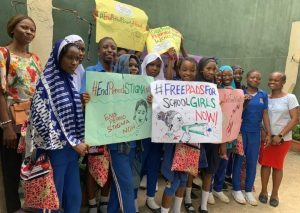
She described the event as an opportunity to draw attention to the distressing consequences of period poverty, which affects over 36 million Nigerian women and girls.
“Period poverty makes millions of girls drop out of school due to chronic absenteeism, as they cannot afford sanitary products,” Abah lamented.
Stating further, she said, “Some are forced into exploitative sexual relationships just to access these basic needs, which sometimes result in unwanted pregnancies and exposure to sexually transmitted diseases.”
Abah however criticized the Nigerian government’s inaction in enacting a national menstrual hygiene policy, contrasting it with progressive strides made by other countries.
“Kenya distributes free sanitary pads to schoolgirls, Rwanda has removed all taxes—including VAT—from sanitary products, and Scotland now provides sanitary items to all women of reproductive age,” she said, ending that, “Nigeria must wake up to this national epidemic.”
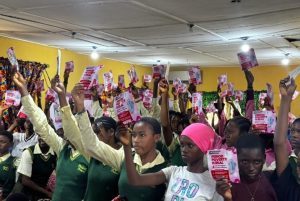
The event included mentorship sessions, hygiene education, leadership development talks, a video documentary screening, question-and-answer segments, and distribution of school bags, sanitary pads, and other essential school materials.
Voices of Encouragement and Wisdom
Mrs. Anka Amurawaiye, a girl leadership advocate, opened the sessions by welcoming participants and sharing her personal commitment to girl-child empowerment.
“This event is dear to my heart. I have three sons and one daughter. Anything that concerns women, I’m passionate about it,” she said.
She also said, “Tell yourself, if you are proud to be a girl, you are made for greatness. You are born to lead.”
She went on to highlight the biological strength of females, drawing from her understanding of genetics and nature.
“For every female child that is born, that child is created to be a leader. I recently found out that if there are 10 miscarriages, nine of them are boys and only one or two are girls. The chromosome that makes a girl is stronger than that of boys,” she explained. “God knew what our bodies would undergo—from menstruation to pregnancy and labor—and gave us the extra strength.”
She encouraged the girls not to let societal perceptions pull them down.
“Don’t let anything put you down. One of the keys to realizing your full potential is believing in yourself,” she said.
Next, Kris Oziofu, a popular on-air personality, spoke passionately about resilience and self-worth, encouraging the girls to reject shame and misinformation around menstruation.
“I like to talk to girls because I was once a girl too. Whatever you’re going through, I’ve experienced it. Menstrual hygiene is very key,” she said.
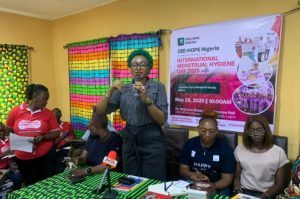
“We are made to feel ashamed about our periods—as if it’s a disease or that we’re less human. But you are not any less or better than anyone. You are exactly who the world needs,” she encouraged.
Oziofu emphasized self-care and focus.
“You may not be able to control not having a pad, but that doesn’t make you less of a person. Don’t pity yourself. Find ways to manage your situation with dignity. Once menstruation begins, pregnancy becomes possible, so guard your goals. Know when you’re about to menstruate, maintain good hygiene, and always be prepared,” she said.
Mrs. Ronke Oyelakin, the Lagos State Coordinator of the Child Protection Network (CPN), took the girls through a practical session on menstrual hygiene and personal safety.
“Don’t let any man touch you. Your private part is private to you,” she said firmly.
She also advised the girls to have trusted people to talk to. “If you don’t have someone to talk to, talk to any of us here. Confide in your teachers. Don’t keep silent when someone is touching you inappropriately.”
She urged the girls to choose their friends wisely and prioritize knowledge and self-respect over fleeting social trends.
“Be mindful of the kind of friends you keep. What you should be after is the information that can help shape your mind, not the latest dance on social media.”
Olori David Adegoke also addressed the girls, focusing on confidence and dignity during menstruation.
“No child should be ashamed because of her period,” she said. “Don’t let frivolities distract you. Boys will come, but be confident and know who you are. Get someone to talk to. Dress the way you want to be addressed,” she advised.
Nurse Adedoyin Amurawaiye offered a detailed health talk on how menstruation works and the importance of hygiene.
According to her, “Every cycle, our body prepares for pregnancy. When the egg is not fertilized, the lining is shed and blood is expelled. That’s menstruation,” she explained.
Continuing, she said, “It’s important to bathe at least twice a day, especially during your period.”
She however demonstrated proper use of sanitary pads and gave hygiene tips.
Counseling the girls further, she said, “You should change your pad every four to six hours and always clean from front to back to prevent infection. Also, eat nutritious foods and drink plenty of water.”
Oluebube Sharon James, an actor and advocate, shared practical advice on preparedness and called for community responsibility.
“Always carry a pad with you and an extra one as well,” she said. “Schools should keep pads in the First Aid box for emergencies. Girls should never have to resort to using tissue paper or feel embarrassed when their period starts suddenly,” she said.
She also highlighted alternatives like reusable pads, sanitary cups, and tampons, emphasizing proper hygiene for each.
Willie Workman Oga, musician and advocate, rounded off the day’s talk with a message on goal-setting and staying focused.
According to him, “One thing that helped me in life is staying focused. It can be hard, but it helps you avoid distractions and unlock your potential.”
He also said, “Define your goals and don’t allow peers to distract you. Learn from successful people around you—in your neighborhood, at church, or online.”
Participating Schools and Communities
Some of the following schools and communities were present at the event:
1. Pachelli School for the Blind, Surulere, Lagos
2. Queen Amina School, Lagos
3. Queen Esther School Salvation, Mowe, Ogun State
4. Delight Premium Royal Schools, Oke-Aro, Ogun State
5. Heavenly Love Academy, Mowe
6. Perfect Praise Secondary School, Olowora, Lagos
7. Oke-Aro Secondary School
8. Schoolgirls from Oke-Ira, Makoko, Monkey Village, Opebi, Ojota, and other communities across Lagos.
…and other schools
Final thoughts on the event
CEE-HOPE’s Menstrual Hygiene Day event successfully brought to the fore pressing issues affecting Nigerian girls while equipping them with the tools—emotional, physical, and psychological—to navigate life confidently and safely. With passionate facilitators and eager participants, the day ended with renewed energy and a clear message: menstrual health is a right, not a privilege. The call for nationwide menstrual hygiene policy remains louder than ever.
*Report by Dayo Emmanuel