 National Wire About Nigerians, Nigerian Business and Other Stories


Dr. Jerry Ibeh is the Acting Registrar of the Institute of Entrepreneurship and Apprenticeship Management and Administration (IEAMA), a body inspired by the Igbo Apprenticeship System. IEAMA now plans to formalize the scheme by providing training and mentorship to support stakeholder entrepreneurs and strengthen the national economy. In this interview at the inaugural event of the institute, where new members were inducted, Ibeh spoke with journalists about the institute’s vision, importance, and contribution to Nigeria’s economy. DAYO EMMANUEL reports.
Can you give an overview of this event?
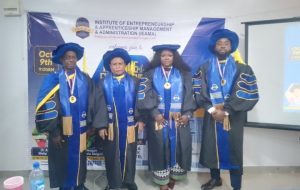
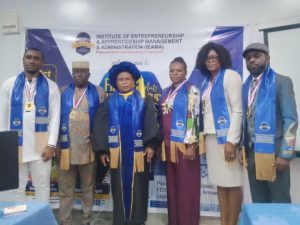
We are glad our speakers did justice to the sessions facilitated. We are happy to hold this event, being our first program since becoming an institute less than four months ago. We are not doing badly. Today, we inducted about 15 fellows, and we have five organizations as corporate members of the institute. I believe we have laid a good foundation, and we are not relenting but moving forward.
What inspired this institute?
What inspired this dream is the Igbo boys system in Igboland. They are the bedrock of the Nigerian economy. Today, when you go to places like Alaba International Market — the largest market in Africa — they dominate it. Most of them do not have formal education. What they do is go to the village, pick someone who serves for six years, train the person, and then help him start his own business. Before long, he starts traveling to China to import goods.
However, this system has not been formalized, and that’s the gap we want to fill. The institute aims to help them build capacity through structured weekend trainings. We have many entrepreneurs struggling to raise funds. We are asking: how can we bring them together and connect them with financial institutions? We want to be the institute that builds the next generation of entrepreneurs.
How do you plan to formalize the Igbo boys apprenticeship model?
By December, we are planning a program with some ministries in Imo State. That will officially launch the institute in the South East. Our topic for the event has not been disclosed yet. We will have a meeting with Igbo entrepreneurs in Owerri on the 23rd of December, and everything we intend to achieve will be rolled out that day.
In everything you do, there has to be a bridge. These boys often have issues with their bosses—cases of fund embezzlement or not being properly settled at the end of their training. There should be someone to mediate and ensure fairness. It is not enough to pick boys without formal education and start training them. By the time they grow up, some mismanage funds due to lack of knowledge.
That is where the Institute comes in—to provide formal education over the weekend and equip them with entrepreneurial knowledge, not just skills. The Institute has different membership categories. We have student membership, which is where these upcoming entrepreneurs without formal education begin. We have already mapped out training for them. We have a training kit designed to help them acquire entrepreneurial knowledge.
There is a difference between entrepreneurial skill and entrepreneurial knowledge. We are focusing on knowledge—so that whatever they have learned, we can expose them further to digital marketing and modern tools. That is what we are also doing with the NYSC. Many people don’t know they can sit in the corner of their homes and run businesses. That is where the institute comes in—to bring people together and give them knowledge.
How do you ensure this initiative is not ethnic or limited to Igbos?
Today, the foundation has been laid, and most of our members are actually Yorubas. The doctor who spoke and the second speaker are Yoruba. It is not an Igbo initiative. Knowledge is universal, and everyone has a role to play. We are talking about entrepreneurship. If this were an Igbo-only affair, we would have started from Eastern Nigeria. But entrepreneurs are our main target.
What are your plans for the youths?
That is why we created the student membership category. Under this, we have specific programs for young people. If you visit our website, you will find all the details about these programs.
We also have associates and other membership levels. The institute is structured so that from student membership, you can move to associate membership, then to full membership, senior membership, and finally, fellowship.
What we are doing now is direct membership because we have a target—to present at least 500 members to the National Assembly within two years. If we rely solely on examinations, we may not meet that target. That is why we are currently offering open and direct membership.
What are your future plans for the institute?
The success of today’s event marks a new beginning. Like I said, we have laid a foundation and are already planning for 2026. We hope to take our activities to the streets of Abuja. The institute’s Governing Council will be constituted next year, and we will select members from among the foundation members. These are the people who will take major decisions for the institute.
Are you envisaging any challenges from government policies?
No, because in everything we do, we carry the government along. The government can even issue us letters of support to the NYSC to become our full partners. We already have such a letter, which allows us to visit all NYSC CDS groups across Nigeria to recruit members.
How would you advise the Nigerian government on stabilizing the economy?
The biggest challenge entrepreneurs face is access to finance. If the government can make funding available and accessible, it will go a long way in helping them grow—and ultimately, in strengthening the national economy.