 National Wire About Nigerians, Nigerian Business and Other Stories


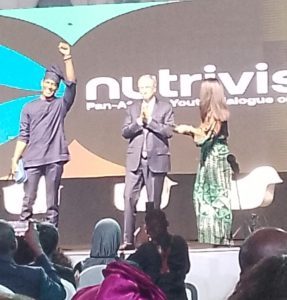
Over the decades, American billionaire philanthropist, Bill Gates has consistently invested in Nigeria, spending billions of dollars addressing poverty, healthcare, and nutrition in Africa’s largest population.Recently, Gates, co-founder of the Bill and Melinda Gates Foundation, spoke to Nigerian youths in Abuja on nutrition and other pressing issues on food security and sustainability. National Wire’s News Editor, DAYO EMMANUEL was there and here reports.
Africa faces significant challenges in healthcare and agriculture, such as polio, malaria, malnutrition, and climate change’s impact on food production. However, foundations and development organisations are working to make a difference.
The Gates Foundation has been at the forefront of combating polio, improving maternal nutrition, and boosting agricultural productivity. Initiatives are underway to enhance the continent’s quality of life.
Research and development efforts explore the impact of technology, particularly Artificial Intelligence (AI), in healthcare and agriculture, offering a future where health equity and food security are achievable.
Eradicating Polio: A Long but Promising Journey
Africa has made significant strides toward eradicating polio, which once crippled thousands of children. Vaccination efforts led by global health organizations have driven this progress.
“We’ve made great progress in eliminating wild types of the virus. Now, we are focusing on getting rid of vaccine-derived polio, ensuring children continue to get vaccinated to prevent any resurgence,” Gates said.
This reflects broader healthcare challenges in Africa. With limited resources, ensuring children receive vaccines is difficult. Optimising healthcare systems to meet vulnerable populations’ needs involves training workers, raising awareness, and ensuring vaccine availability.
“A lot of work goes into training healthcare workers and raising awareness, but in the long term, technologies like AI could help improve vaccine distribution and offer guidance through mobile platforms,” Gates added.
AI’s Potential to Revolutionise Healthcare
Artificial Intelligence is rapidly transforming healthcare by streamlining processes, accelerating research, and improving diagnosis and treatment. In developing countries like Nigeria, AI holds promise for bridging healthcare gaps.
“We’re already using AI to design new vaccines and drugs. Research is underway to use gene-editing techniques that could alter mosquitoes so they can’t carry malaria-causing parasites,” Gates explained.
AI could also provide personalised health advice via mobile phones in remote regions. However, infrastructure investments are needed for AI-driven healthcare to succeed.
“AI can help address healthcare gaps, but it requires reliable internet access and proper healthcare policies,” Gates emphasised.
Addressing Malnutrition: Focus on Maternal and Child Health
Nutrition, especially maternal and child nutrition, remains critical in Africa. Malnutrition hampers physical and cognitive development, leading to long-term health and educational consequences.
“Nutritional interventions are particularly important for pregnant women and young children. We focus on providing multi-micronutrient supplements (MMS) during pregnancy, which have shown great promise in improving birth outcomes,” Gates said.

Scaling up these programs requires government commitment and funding.
Climate-Adapted Agriculture: Feeding a Growing Population
Nigeria’s growing population increases the demand for sustainable agricultural practices that can withstand climate change. Farmers face unpredictable weather and declining soil fertility, making food production challenging.
“We’re working on improving seed varieties that are more resilient to climate change. These seeds are designed to provide higher yields, even in harsh conditions,” Gates said.
While hybrid seeds offer higher productivity, they also raise concerns about farmer dependency. Gates acknowledged this concern, noting that farmers should have options. “The key is balancing innovation with affordability,” he assured.
The Future of Healthcare and Agriculture in Nigeria
Looking ahead, Africa’s healthcare and agricultural future present challenges and opportunities. Progress in vaccination, maternal nutrition, and climate-adapted agriculture shows immense potential for positive change.
“We’ve made significant progress, but there’s still much to be done. Partnerships and continued investment in technology and infrastructure will be key,” Gates concluded.
With sustained effort, innovative technologies, and collaboration, Africa can look forward to a future where healthcare and nutrition improve the quality of life for all.