 National Wire About Nigerians, Nigerian Business and Other Stories


The rights and unionisation of domestic workers in Nigeria took center stage at a seminar organised by the Centre for Children’s Health Education, Orientation and Protection, (CEE-HOPE) Nigeria, in collaboration with Rosa Luxemburg Stiftung.
The event which held on Tuesday in Lagos, gathered rights activists, social workers, and journalists to discuss the urgent need for recognising and protecting domestic workers’ rights.
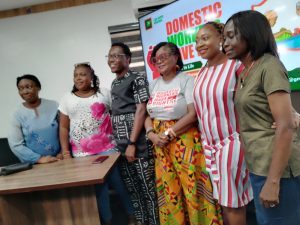
Betty Abah, Executive Director of CEE-HOPE Nigeria, highlighted the severe oppression and invisibility faced by domestic workers in Nigeria.
“Domestic workers in Nigeria are not just oppressed but are invisible. Unlike countries like Kenya, Uganda, and South Africa where domestic workers have unions and know their rights, Nigerian domestic workers suffer various abuses and lack awareness of their rights,” Abah stated.
Abah cited compelling statistics from the International Labour Organisation (ILO) to underscore the gravity of the situation.
“Globally, there are 75.6 million domestic workers, 76.2 percent of whom are women. Additionally, 152 million children, including 64 million girls and 88 million boys, are involved in child labor worldwide.
“Although domestic workers provide essential services, they rarely have access to rights and protections. They work in isolation under harsh, unregulated conditions and are often underpaid, facing various forms of abuse,” Abah said.
She emphasised that unionizing domestic workers could help safeguard their rights and address issues of underage labour in the sector.
Despite Nigeria’s ratification of ILO Convention 189 in 2011, which recognises the rights of domestic workers, abuses continue unabated.
Abah called on relevant authorities to address these violations and support the unionisation efforts for domestic workers.
Human rights activist, Hassan Soweto, echoed the need for legislative review and advocacy.
“We need to study current labor laws in Nigeria and learn from other African countries where domestic workers have union protections. This will help us to intervene effectively and propose new legislation,” Soweto suggested.
He also noted that, “Domestic work is going to continue to exist and would be carried out by people, it is the lowest scale of human endeavour. Even those not domestic workers like women in patriarchal relationships have found themselves in this situation where they find it difficult to aspire, then these individuals must be protected.”
Ronke Oyelakin, State Coordinator of Child Protection Network and a representative from Bimbo Odukoya Foundation, stressed the importance of enforcing existing child protection laws.
“Child labour, especially in domestic work, is exploitative and illegal. We must ensure that every child has equal opportunities and is protected from abuse,” Oyelakin emphasised.
She however enlightened that, “We have the Child Rights Act in Lagos State which makes it so clear that every child irrespective of family background should be given equal rights.”
She also stated that, “The International Labour Organisaton estimates that there are up to 15 million workers under age 14 in Nigeria many of who are house girls. Imagine a girl used as House girl is at risk of different exploitation. She could be abused sexually.”
Vickie Uremma, another participant, recommended learning from countries with established unions for domestic workers and building a comprehensive database in Nigeria.
“Let’s start with Lagos State and create a database of families with domestic workers. We need to continue aggressive advocacy and awareness campaigns,” Uremma urged.
Funmi Ajayi shared her personal experience while living with her uncle in Jos, Plateau State as a little girl, raising concerns about the exploitation of relatives’ children living with families.
She called for proactive measures to ensure the unionisation of all domestic workers in Nigeria, emphasising the need for on-the-ground advocacy.
The seminar concluded with a call to action for all stakeholders to support the unionisation of domestic workers and protect their rights, aiming to bring about significant changes in the sector.