 National Wire About Nigerians, Nigerian Business and Other Stories


By Dayo Emmanuel with Agency Report
The Nigerian currency, the Naira has been grouped among the worst currencies in the world despite its 4% drop against the US Dollar, ahead of the Canadian dollar and the Swis Franc according to the Nigerian government exchange rate.
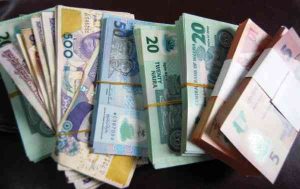 According to Bloomberg.com, the Naira is only manageable going by the Nigerian government’s assumption while the population suffer, grappling with a 37% drop on the widely used black market.
Meanwhile, as the Naira is doing poorly, it is still better than the Ghanian Cedi down by nearly 55% in 2022 and the Sri Lankan Rupee.
The Sierra Leone’s currency down by 35% and the Egyptian pound down by 35% are those at par with the Naira used locally in Africa’s largest economy.
In recent years, Nigeria has witnessed an exodus of young people fleeing harsh economic conditions.
Referred to as ‘japa’ in new local slang, meaning something similar to an escape, more young people are strategising their ‘japa’ as the population standing around 200million is yet to feel any exodus.
Some who relocated to neighbouring West African countries like Ghana may soon realise they have not found the desired green pasture as Ghanaians also groan under heavy weight of inflation.
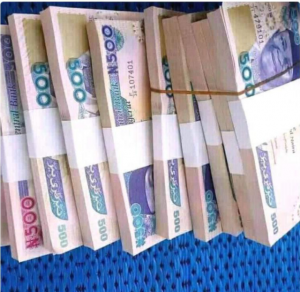
The Nigerian government is planning to redesign the three top notes of N1,000, N500 and N200 which is expected to mop up excess Naira outside the banks and strengthen the local currency.
Frankly speaking, the Naira is now among the worst in the world according to Bloomberg.
Operating a controlled official rate, but the parallel market is where the exchange rate of the local currency is largely determined by the level of demand for the dollar which scarcity has forced exchange rate above N800 to $1.
With inflation standing at 17.4% in September as against 17.1% in August, the Naira volatility is the single largest contributor to the surge in inflation suffocating the economy.
Presently there is appreciation in the country as Nigerians approach the yuletide. A bag of rice is approaching all time high of N50,000 as other commodities are also soaring pass the common man.
Nigeria’s Central Bank rations dollars at the official rate, cutting off access to many businesses and individuals, which in turn drives demand to the unauthorised black market.
The 31 January deadline to exchange the existing Naira bills for new ones to be unveiled in December seems too tight as the apex bank, the Central Bank of Nigeria estimates that as much as 2.7 trillion Naira ($6.1 billion) sits outside bank.
Nigeria has an average of 4.5 bank branches per 100,000 people and 45% of adults according to research don’t have a bank account.
Story by Dayo Emmanuel with Agency Report