 National Wire About Nigerians, Nigerian Business and Other Stories


By Dayo Emmanuel
The Institute of Entrepreneurship and Apprenticeship Management and Administration (IEAMA) has concluded its Enterprise Leadership Summit 2026, bringing together stakeholders across sectors to advance conversations around entrepreneurship, skills development, and national growth.
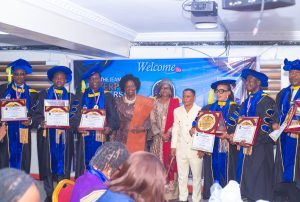
The event, held on Wednesday at the Lagos Centre of Commerce and Industry building in Alausa, Ikeja, drew participants from diverse vocations and featured the induction of new members into the association.
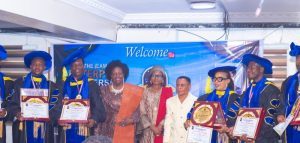
With the theme, ‘Leadership for National Growth: Entrepreneurship as a Catalyst for Economic Transformation’, the summit emphasised the urgent need to formalise and professionalise entrepreneurship and apprenticeship systems in Nigeria.
Delivering his address, the Director-General and President of IEAMA, Dr. Jerry E. Ibeh, described the summit as a defining moment for enterprise development in Nigeria and across Africa. He noted that the gathering marked a transition from informal practices to structured, globally competitive systems.

“Today marks a historic milestone, not only for IEAMA as an institution but for the future of entrepreneurship and apprenticeship development in Nigeria and across Africa. This gathering is the first of its kind—a convergence of vision, structure, and purpose designed to redefine enterprise as a respected, regulated, and globally competitive profession,” he said.
Ibeh stressed that for decades, entrepreneurship in Nigeria has thrived largely within informal frameworks, driven by resilience but constrained by a lack of standardisation and institutional recognition.
According to him, IEAMA is committed to changing that narrative.
“As Director General and President of IEAMA, I stand with a clear conviction that the time has come to institutionalise entrepreneurship and formalise apprenticeship systems in a way that reflects excellence, dignity, and sustainability,” he stated.
He explained that the association aims to bridge the gap between traditional apprenticeship models and modern professional standards by introducing certification, structure, and governance into enterprise development.
“Today, we take a bold step forward—from tradition to transformation, from practice to professionalism, and from individual efforts to an institutional legacy,” he added.
Ibeh further highlighted the significance of inaugurating the pioneer Governing Council of the association, describing its members as “foundation builders” who would shape policies and standards that would guide the institute for generations.
“To those being inducted into IEAMA, you are joining more than an institute—you are becoming part of a professional movement. This movement seeks to elevate enterprise from mere survival to a structured pathway of growth, recognition, and influence,” he said.
He concluded by reaffirming that economic prosperity in Nigeria depends largely on empowering individuals not just with skills but with structured systems that ensure sustainability and growth.
Speaking as Special Guest of Honour, Professor Abiola Lanre Awosika-Fapetu, Rector and Founding CEO of the Olawoyin Awosika School of Innovative Studies (OASIS), highlighted the transformative power of entrepreneurship in national development.
“Entrepreneurship is what is going to get any country, and particularly Nigeria, on the map. Entrepreneurship creates a multiplier effect. You can have four jobs created from one entrepreneurial venture,” she said.
She noted that while Nigeria has a vibrant base of small-scale enterprises, greater impact can be achieved when such businesses are organised and supported within structured systems.
“In this country, we have small-scale enterprises, which is good, but when we have an organisation like this to bring them together, they can achieve much more. The time is now, and it is very essential,” she said.
Addressing the need to professionalise entrepreneurship, Awosika-Fapetu pointed out the disconnect between academic knowledge and practical experience.
“People go to universities to study entrepreneurship and earn degrees, yet those practicing entrepreneurship are not adequately recognised. There is a gap—those who study it often have theoretical knowledge, while practitioners have practical experience. If we merge the two, we will have a full force in terms of productivity, professionalism, and creativity,” she explained.
She encouraged newly inducted members to maximise the opportunities provided by the association, stressing the importance of collaboration and continuous growth.
“Entrepreneurs are the soul of the economy. In this country, about 20 per cent are employed by the government, while the rest are entrepreneurs. This shows how important it is for SMEs to unite and achieve even more for the economy,” she said.
On policy implementation, she noted that while frameworks may exist, effective monitoring remains a challenge.
“I believe policies are already in place. The focus now should be on monitoring those policies to ensure they work as intended. Funds often do not reach the entrepreneurs who need them most, and we must ensure that these systems truly benefit them,” she added.
Also speaking, a Council member of the association, Dr. Bukola Alimot Ajani, said IEAMA is focused on improving opportunities for its members through structured initiatives.
“We have several plans. One key initiative is to institutionalise the apprenticeship platform so that individuals with skills can be identified and supported for small jobs and sponsorships,” she said.
She emphasised the importance of structured skill acquisition, noting that organisation and certification increase value and recognition.
“Structuring skills acquisition is very important because once skills are structured, the value increases,” she stated.
Encouraging the newly inducted members, Ajani urged resilience and perseverance.
“Entrepreneurship is not easy—you rise and fall. But a time will come when opportunities will meet preparedness. There are many opportunities as a group. It is easier to access finance, gain recognition, and be certified within a collective structure,” she said.
An industrialist and inducted Doctorate Fellow, Adeniyi Samson Adekunle, reflected on his over three decades of experience in the building and construction sector, highlighting the importance of capacity development.
“I am glad to be one of the inductees today. I have been in the building industry, construction, and entrepreneurship for more than 30 years. My company was first registered in 1994,” he said.
Adekunle, who is the founder of Sam Adekunle Investment, also known as SAMAD, noted that beyond profit, his passion has been in mentoring others and creating opportunities.
“I have trained a lot of people, and that has been one of the greatest joys I have had—seeing people succeed. We must understand that the government cannot provide employment for everyone,” he said.
He stressed the need for entrepreneurs to build themselves and their businesses deliberately.
“If you want to succeed, you need to build yourself, build your business, and build capacity. Over time, I developed myself to be able to impact others, just as I was trained for years by someone else,” he explained.
On the role of the association, he emphasised mentorship, access to finance, and bridging gaps between entrepreneurs and institutions.
“There are many youths influenced by the ‘japa syndrome,’ but we must build systems that can accommodate, mentor, and connect people to opportunities. No matter how skilled you are, without financial support and guidance, growth becomes difficult,” he said.
Adekunle also warned against shortcuts, stressing that sustainable success requires process and discipline.
“Shortcuts will cut anyone short. If you give someone without capacity a large sum of money, it will eventually be lost. Capacity is what sustains success,” he noted.
Another Council member, Ambassador Prince Ajisefini Ayodele Tajudeen, popularly known as the Jagaban of Enterprise, shared his journey and the lessons learned over decades in the field.
“I have been in this field for over two and a half decades. To become a ‘Jagaban’ of entrepreneurs, you must have experienced the worst, the better, and the hopeful sides of entrepreneurship. I have seen all three stages,” he said.
He recounted the challenges he faced in his early years, noting that resilience and vision were key to his success.
“There were times when there was little or no money, and whatever was available had to be reinvested into the business. The success you see today is a result of resilience. As an entrepreneur, you don’t put money first; you drive your vision first,” he said.
Tajudeen reaffirmed his commitment to the association, noting that his institution would continue to support training and certification of entrepreneurs across Nigeria.
“With my network across the 36 states, I am ready to bring valuable members on board. This is one of the best platforms supporting entrepreneurial growth,” he said.
Advising young people and aspiring entrepreneurs, he highlighted the importance of discipline and continuous learning.
“There are three key elements: enterprise, entrepreneur, and entrepreneurship. What sustains all three is perseverance. You must have discipline, commitment, determination, and focus. Skills acquisition and knowledge are the foundation of success,” he said.
He encouraged young Nigerians to embrace entrepreneurship as a viable path to economic empowerment.
“Nigeria operates largely on a private economic system. We must shift from a public-driven mindset and empower young people to thrive in the private sector,” he added.
The summit emphasised a shared consensus among stakeholders: that structured entrepreneurship, supported by policy, mentorship, and certification, remains critical to Nigeria’s economic transformation. The induction of new members and inauguration of the governing council marked a step toward building a more organised and impactful enterprise ecosystem in the country.