 National Wire About Nigerians, Nigerian Business and Other Stories


By Precious Nwonu
“There’s a kind of chain reaction that happens. When there is conflict in a major oil-producing region, the first thing you usually see is an increase in crude oil prices. That then feeds into refined fuel prices, petrol, diesel, aviation fuel, and so on,” said Head of Insights at SBM Intelligence, Victor Ejechi, in an exclusive interview with Precious Nwonu.
The near shutdown of the Strait of Hormuz a critical global oil route through which about one-fifth of the world’s oil passes is already raising fuel prices, increasing transportation costs, and pushing up the price of goods around the world.
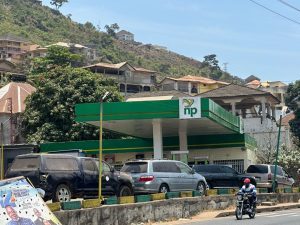
Photo Credit: Tarawally Esther Kadie
What began as a military confrontation between Iran, Israel and the United States has gradually developed into a global economic problem affecting countries far from the battlefield.
Oil prices have surged significantly since the war began, with analysts warning that disruptions to supply routes could keep prices high and continue to affect fuel, transportation, food, and overall cost of living in many countries, especially those that depend on imported fuel.
For many low-income earners around the world, this is no longer just an international story; it is now a daily economic reality that affects how they move, what they eat and how they survive.
For ordinary people in different parts of the world, the war is not just something they watch on television it is something they now feel in their daily expenses, especially transportation.
In Enugu State, Nigeria, 42-year-old commercial bus driver Chinedu Okafor, who operates along the Gariki–Old Park and sometimes Ogbete route, said the increase in fuel price has become a daily struggle that is gradually killing his business and putting his family under serious financial pressure.
Sitting inside his bus while waiting for passengers, he complained bitterly that fuel now sells for about 1,400 naira per litre, compared to about 850 naira per litre before the war began, a difference he says has completely changed his daily income and made life more difficult for transport workers.
According to him, before the increase in fuel price, he used to make an estimated daily earning of about 18,000 to 20,000 naira after buying fuel and settling the bus owner, but now he struggles to make 9,000 to 11,000 naira on a good day because passengers are no longer willing to pay the new transport fares.
Chinedu, who lives in Camp and is a father of four children, said the situation has forced many drivers to increase transport fares, but this has also led to constant arguments with passengers who accuse them of being greedy, not understanding that the drivers are also trying to survive.
“People think we are the ones increasing the price because we want more money, but they don’t know that after buying fuel at 1,400 naira per litre, there is almost nothing left for us,” he said.
“Some days, I stay at the bus stop for long time because passengers will be pricing transport like they are pricing tomatoes in the market. If I carry at the old price, I will run at a loss, and if I carry at the new price, passengers will not enter. Either way, we are suffering.”
The situation is similar in Sierra Leone, where broadcast journalist Tarawally Esther Kadie said the recent spike in fuel prices is creating a ripple effect on her daily expenses, from transportation fares to feeding and other basic needs.
She explained that before now she used to spend around 30 Leones daily on transportation fares, but now she spends almost twice that amount.
Despite government price guidelines, she said drivers often charge passengers more.
“Today for example I had to pay 8 Leones for the same distance I paid 6 Leones for last week. When I questioned the tricycle rider he said the government cannot determine the price for his personal tricycle,” she said, adding that while petrol prices may have risen by about 14 per cent, the increase has disrupted her everyday life.
Another Sierra Leone broadcast journalist, Madina Sheriff, said the increase in fuel price has significantly affected her weekly and monthly expenses.
According to her, before the fuel price increased from 28.5 to 32 Leones, she was paying 20 Leones as transport fare for taxi and tricycle, while the bike fare from her house to the junction was between 7 and 8 Leones.
After the increment, the taxi and tricycle fare increased from 20 Leones to 25 Leones, while the bike fare increased to 10 Leones.
She explained that the fuel increment has been done twice since the war in Iran, from 28.5 to 32 and now 35 Leones for diesel, while petrol remained 32 Leones, a situation that has caused confusion because commercial drivers now insist they use diesel.
“So, calculating all of these costs, my transportation for the week is 450 Leones (about 17 dollars) just from home to work and back, without going out for stories. If you calculate that for 20 working days, it is 1,800 Leones (about 74 dollars) per month. That’s almost my salary for the month, and I still have to buy lunch during work. So it feels like I am literally working for transportation and lunch,” she said.
In Abuja, Nigeria, a corporate professional, Ogechukwu Ikwueme, said while the transport fare increase may appear small at first, the overall impact has been significant.
She explained that about a month ago she used to spend 1,000 naira getting to work, but now she spends about 1,200 naira.
She said the bigger problem is not just the price increase but the availability of vehicles.
According to her, many transporters are unable to get fuel or cannot afford it, leading to fewer vehicles on the road, longer waiting times, and more crowded buses.
She explained that while the price increase may look small on paper, the overall experience of commuting has become more difficult and exhausting.
In Ghana, journalist Kwaku Asante said fuel prices have also increased significantly.
According to him, before the war, a litre of petrol sold between 9.99 and 10.25 cedis, but it is now around 12.25 cedis.
Diesel has also seen a significant increase, and commercial transport operators are already threatening to increase transport fares if prices do not fall or stabilise.
However, another Ghanaian resident, Benjamin, said the full effect has not yet been felt in the country, explaining that while fuel prices may eventually affect transportation, the pressure is not yet fully visible, although there are already fewer buses available.
For students, the situation is also becoming difficult.
Ahmad Hawa’u Malami, a 200-level student of English and Literary Studies, in Sokoto, said the increase in fuel prices has made transportation very expensive and has affected his daily movement and spending.
He explained that before, he used to spend about 1,000 to 1,200 naira to visit his aunt, but now he spends close to 2,000 naira for the same trip.
He added that even short distances now cost around 200 naira, forcing many students to trek long distances to save money.
He said the increase in fuel price has affected not just transportation but also the prices of basic items and services, as sellers now blame the high cost of transporting goods to the market.
According to him, the situation has created a chain reaction affecting both buyers and sellers, making daily living more expensive and harder to manage since expenses keep rising while income remains the same.
Beyond rising fuel and transport costs, the conflict has also significantly disrupted global air travel, particularly in major transit hubs like Dubai.
Following drone and missile attacks linked to the conflict, operations at Dubai International Airport one of the busiest airports in the world were temporarily suspended, with several flights cancelled or diverted as a precaution.
In some cases, passengers and staff were moved to shelters as air defence systems intercepted incoming threats near the airport.
The disruption has not been limited to Dubai alone.
Across the Middle East, several countries including the UAE, Qatar, Bahrain, Iraq and Israel have at different times closed their airspace, forcing airlines to reroute flights, suspend services, or operate at reduced capacity.
In addition, major Gulf airlines such as Emirates, Etihad Airways and Qatar Airways have scaled down operations, with some operating at just 20 to 75 percent of their normal capacity, while others cancelled flights entirely during peak tensions.
These disruptions have had a ripple effect on global travel and logistics.
A drone strike near Dubai airport even led to a temporary suspension of flights and diversion of aircraft to other airports, highlighting how quickly the conflict can affect international travel routes.
At the same time, rising jet fuel prices and security concerns have increased ticket costs, reduced passenger demand, and created delays in cargo and humanitarian supply chains, further compounding the global economic impact of the war.
These stories from different countries show how a war happening thousands of kilometres away is now affecting the daily lives of ordinary people in very direct ways.
While governments discuss oil markets, military strategy and diplomacy, bus drivers, journalists, office workers, small business owners and students are dealing with the real-life consequences higher transport fares, rising food prices, reduced income and a more difficult cost of living – showing how a geopolitical conflict in one region can quickly become an economic burden for citizens around the world.
The conflict is therefore no longer just a military confrontation; it is also an economic story and a human story, unfolding in bus parks, markets, offices and homes across the world.
Background: What Started the Iran–Israel–US Tensions
The current conflict involving Iran, Israel and the United States did not begin overnight.
It has roots in decades of political rivalry, regional power struggles, and distrust.
Iran and Israel have long been adversaries since Iran’s 1979 revolution, when Tehran adopted an openly hostile stance toward the Israeli state and began backing groups opposed to it.
Over the years, this rivalry grew through indirect clashes, proxy battles, and mutual accusations, with tensions rising periodically throughout the Middle East.
What triggered the current war, which began on 28 February 2026, was the breakdown of prolonged negotiations between Iran and the United States over Iran’s nuclear and military ambitions, followed by a coordinated airstrike by Israel and the United States on multiple Iranian targets.
These strikes, launched without a final agreement, hit leaders, military sites, and strategic infrastructure inside Iran, and marked one of the biggest escalations in decades.
In response, Iran launched hundreds of missiles and drones at Israel and at bases used by U.S. forces across the region, signalling a fullscale military confrontation rather than isolated attacks.
Since then, exchanges of missiles, drones, and airstrikes have continued, drawing in allied militias and inflaming tensions across the Gulf.
Civilian and military losses have already been reported on multiple sides.
In Israel, at least 19 people have been reported killed and over 4,000 injured by Iranian missiles since the war began, the largest single toll in a recent strike was nine civilians in Beit Shemesh.
In a statement on the US social media platform X, the ministry said 3,924 casualties have been recorded since the escalation began following Iranian attacks.
In Iran, estimates of casualties are less precise because official figures vary, but multiple reports including from Iranian sources suggest more than 1,332 people have died in U.S.Israeli attacks on Iranian territory in the early weeks of the war.
These figures include both combatants and civilians affected in cities and towns across the country.
Reports also indicate senior Iranian leaders, including Ali Larijani, head of Iran’s Supreme National Security Council, was killed in an airstrike, further destabilising Tehran’s leadership.
Oil and Global Fuel Prices – The Strait of Hormuz Explained
One of the key reasons that the Iran–Israel–US conflict is pushing up global fuel prices is the threat to a narrow waterway called the Strait of Hormuz, which sits between Iran and Oman at the mouth of the Persian Gulf.
This strait is not just another shipping route, it is one of the most strategically important passages for the world’s energy supply.
The Strait of Hormuz connects the oil-rich countries of the Persian Gulf to the open oceans.
Almost 20 million barrels of oil roughly one fifth of the entire world’s petroleum liquids pass through this narrow channel every day.
That means about 20 % of global oil demand depends on ships travelling through this strait to reach markets in Asia, Europe, and beyond.
Under normal conditions, tanker ships carry oil and liquefied natural gas (LNG) from producers such as Saudi Arabia, Iraq, Kuwait, Qatar, the United Arab Emirates, and Iran itself to buyers in Asia and Europe.
Because so much oil must flow through this single chokepoint, any disruption or even the threat of disruption can send shockwaves through global energy markets.
When markets fear that oil shipments might be delayed, diverted, or halted completely, buyers around the world start bidding up the price of crude oil, which in turn raises the cost of gasoline, diesel, and other fuels for consumers and businesses.
Even countries that have built pipelines to bypass the strait cannot fully compensate for the vast volume of oil that normally moves through it.
This is why the Strait of Hormuz is often called a “global energy chokepoint”.
Since the start of the war on February 28, 2026, traffic through the vital strait through which 20 % of the world’s crude oil and LNG normally passes – has been brought to a near standstill.
According to analytics firm Kpler, only around five per cent of pre-war volume of vessels have been able to transit it.
The strait has been effectively disrupted by Iran’s military, escalating global economic concerns.
An influential global policy group warned that the blockade was “raising costs, weighing on demand and adding to inflationary pressures” worldwide, as energy markets continue to face instability.
Tensions escalated further when Iran’s military threatened to completely shut down the strategic Strait of Hormuz if U.S. President Donald Trump acted on threats to target the country’s power plants.
Trump reportedly gave Iran 48 hours to reopen the strait.
The military’s operational command, Khatam Al-Anbiya, said in a statement broadcast on state TV:
“If the United States’ threats regarding Iran’s power plants are carried out… the Strait of Hormuz will be completely closed, and it will not be reopened until our destroyed power plants are rebuilt.”
Israel has also taken aggressive action to counter Iran’s control of the strait.
Israeli Defence Minister Israel Katz announced that Alireza Tangsiri, a senior Islamic Revolutionary Guard Corps (IRGC) naval commander overseeing the blockade, was killed in targeted strikes, though Iran has not confirmed his death.
Katz stated that Tangsiri “was directly responsible” for restricting access to the strategic waterway.
The war has since spread across the Middle East, with Iran responding with drone and missile attacks on Israel and U.S. interests in the region.
The ongoing disruption of the Strait of Hormuz has intensified global economic concerns, as any prolonged closure threatens the stability of energy markets, drives up fuel costs worldwide, and adds pressure to global inflation.
Impact of the Iran–Israel–U.S. conflict on developing countries (Nigeria, Africa, Asia)
The ongoing conflict between Iran, Israel and the United States is having a serious impact on developing countries, especially countries in Africa and Asia that depend heavily on imported fuel, food and manufactured goods.
One of the biggest effects is the rise in global oil prices.
Since the conflict began, global oil prices have risen sharply, with Brent crude increasing by more than 50 percent at some points, largely because of disruptions around the Strait of Hormuz, a major oil shipping route through which about 20 percent of the world’s oil passes.
This increase in oil prices is important because when oil becomes expensive, fuel becomes expensive, and when fuel becomes expensive, transportation, food prices and the cost of living also increase.
Experts say this kind of oil shock affects developing countries more because many of them import fuel and already struggle with inflation and weak currencies.
In Nigeria, the impact is already being felt through rising fuel prices, transportation costs and food prices.
Economic experts warn that because Nigeria operates a deregulated petroleum market, higher international oil prices quickly lead to higher petrol and diesel prices locally.
This then increases the cost of transporting goods, the cost of food distribution, and the cost of manufacturing, which eventually leads to inflation and reduces the purchasing power of citizens, especially low-income earners.
Although Nigeria may earn more money from crude oil exports when global oil prices rise, experts say the negative effects such as inflation, exchange rate pressure and rising cost of living often affect ordinary citizens more than the benefits from oil revenue.
Across Africa, the situation is similar because many African countries are oil-importing countries, meaning they buy fuel from the international market.
When oil prices rise, these countries spend more on fuel imports, and this affects their national budgets and currencies.
Economists warn that higher oil prices and weaker currencies could create a negative economic shock for many vulnerable countries, especially in Africa, where governments already struggle with debt, inflation and unemployment.
In many African countries, the rise in fuel prices has already led to higher transport fares, higher food prices, and increased cost of goods and services because transportation and electricity depend heavily on fuel.
This reality can be seen in the experiences of citizens already affected.
For example, a commercial bus driver in Enugu, Nigeria, explained that he now buys fuel at about 1,400 per litre naira compared to about 850 naira before the war, and his daily income has dropped from about 18,000–20,000 naira to about 9,000–11,000 naira because passengers cannot afford the new transport fares.
In Sierra Leone, a journalist said she used to spend about 30 Leones daily on transport but now spends almost double, while another said her weekly transport cost is now about 450 Leones, which is a significant part of her salary.
These personal experiences show how global conflict is affecting everyday life in developing countries through transport and fuel costs.
In Asia, the impact is even more serious for some countries because many Asian countries depend on the Middle East for about 60 percent of their oil supply.
Due to the conflict, oil shipments have been disrupted and transport costs have increased, raising the risk of fuel shortages, higher electricity costs, and increased food prices in countries like India, China and other Asian economies.
Experts warn that if the disruption continues, some countries in Asia could even face power rationing and industrial slowdowns because of high energy costs.
The impact of the conflict is also being felt in the aviation sector, especially in developing countries that depend on imported fuel.
In Vietnam, the aviation authority announced that the national carrier, Vietnam Airlines, will suspend about 23 domestic flights per week from April due to limited supply of Jet A-1 aviation fuel linked to the Middle East conflict.
Although major domestic and international routes will continue, rising global oil prices have made jet fuel more expensive, forcing airlines to reduce some flights.
This shows that the war is not only affecting countries involved in the conflict, but is also affecting developing countries through fuel shortages, flight reductions and increasing travel costs, which can also affect tourism, business and trade.
The war is also affecting global food prices, which is another major problem for developing countries.
Fertilizer production depends on natural gas, and a large percentage of fertilizer materials pass through the Strait of Hormuz.
Reports show that nearly 50 percent of global urea and sulfur exports and about 20 percent of liquefied natural gas used for fertilizer production pass through this route.
When fertilizer becomes more expensive, farmers spend more money to grow food, and this leads to higher food prices.
For developing countries where many people already spend a large part of their income on food, this situation can lead to food insecurity and increased poverty.
What could happen next – Experts’ warnings, global fears
Victor Ejechi, Head of Insights at SBM Intelligence, warns that if the Iran–Israel–U.S. conflict continues, the biggest danger is not just military escalation, but its impact on global energy supply and economic stability.
He explains that conflicts in the Middle East often create immediate uncertainty in the global energy system because the region is central to the world’s oil and gas flows.
Once tensions rise, global markets react quickly, even before any direct disruption occurs, as traders and investors fear potential disruptions to oil supply.
This perception of risk alone can push up oil prices and create instability, especially in countries dependent on imported fuel.
Ejechi highlights the Strait of Hormuz as one of the most critical points in global energy supply.
This narrow passage handles a significant portion of the world’s oil every day, and any threat or blockade even temporary can disrupt global shipping.
He notes that ships may have to take longer routes, insurance costs increase, and supply tightens, all of which drive oil prices higher.
Rising oil prices, in turn, increase fuel, transportation, and food costs, affecting economies far from the conflict zone.
He also explains the chain reaction that follows.
Crude oil prices rise first, followed by refined fuels like petrol, diesel, and aviation fuel.
Transportation costs increase, making it more expensive to move goods, including food.
As a result, food prices go up not necessarily due to scarcity, but because moving goods becomes costlier.
In import-dependent countries like Nigeria, this can quickly worsen inflation and living costs, affecting everyday citizens like Chinedu Okafor, the Enugu bus driver, and students like Ahmad Hawa’u Malami, who are struggling with rising transport costs.
Looking further ahead, Ejechi warns that developing countries are especially vulnerable.
Heavy reliance on imported fuel exposes them to global price shocks, higher import bills, and pressure on foreign exchange reserves.
Rising fuel costs ripple into transport and food prices, reducing purchasing power, especially among lower-income households.
Trade can also be affected, as shipping becomes more expensive or less predictable, disrupting imports, exports, and business operations.
While some countries may eventually seek alternative energy sources or local refining, most remain exposed in the short to medium term.
Business leaders are also warning about possible economic changes if the conflict continues.
The President and CEO of Dangote Group, Aliko Dangote, warned that the Middle East crisis could force Nigeria and other African countries to introduce measures similar to what happened during COVID-19, such as work-from-home policies or reduced working days, in order to reduce energy consumption.
He gave the example of Indonesia, where authorities asked some workers to operate only four days a week and are considering work-from-home arrangements because of energy crisis pressures.
He warned that the people who would suffer the most are small business owners in Africa, such as barbers, food sellers and small business operators who depend on fuel for generators and transportation.
Meanwhile the Senior Special Assistant to the President on Media and Publicity, Temitope Ajayi, in an article titled ‘Middle-East Crisis: How Tinubu’s Policy of Naira-for-Crude Guarantees Supply Security in Nigeria,’ released by the State House, says President Bola Tinubu’s naira-for-crude initiative has shielded Nigeria from the severe fuel scarcity afflicting major economies worldwide amid the ongoing Iran-Israel-US conflict in the Middle East.
He said the policy, approved in July 2024 and launched on October 1, 2024, has ensured uninterrupted petroleum product supply in Nigeria while countries across Europe, Asia, and Africa experience acute shortages and long fuel queues.
Ejechi concludes that if the conflict does not de-escalate, the world could face prolonged high fuel prices, rising inflation, slower economic growth, and increased hardship, particularly in developing countries where households already spend a large portion of their income on food and transportation.
The concern now is not just how long the war will last, but how long its economic impact will be felt globally.